Jazz was born in America, in cotton fields and cities... in brothels and churches. In the opera house, and the night club... jazz was music of the people. It began as part of a quest for freedom among those who were disenfranchised. From their struggle, it became a platform for self-expression. For more than one hundred years, jazz has been played throughout America, and everywhere it has been played, it has been more than just a style. It has been more than just a technique. It has been a way of liberation through music.
Watch a PreviewJokes and poetry aside, April also gives us Jazz Appreciation Month. Join us as we take a look at Jazz through the eyes of Indiana Jones in The Mystery of the Blues. In this episode, Indy gets caught up in Chicago's underworld, but also finds himself discovering a passion for the latest music craze, Jazz. With the help of Jazz legend, Sidney Bechet, Indy learns how rhythm and improvisation are at the heart of what forms this new style of music.
Names like Louis Armstrong, Ella Fitzgerald, Duke Ellington, and Dizzy Gillespie are synonymous with brining Jazz to the mainstream and paving the way for later musical styles. Jazz remains popular today, but it is forever linked to the feel good days of the "Roaring Twenties."
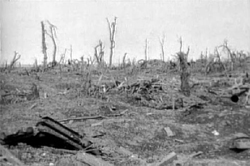
In honor of National Poetry Month, we would like to invite you to learn more about the numerous poets and poems inspired by The Great War.
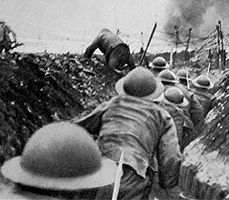
As World War I dragged on and became such a horrible conflict, many soldiers found themselves questioning their loyalty and purpose. Young men like Alan Seeger, Wilfred Owen, Siegfried Sassoon, John McCrae, and Robert Graves let out their war weary frustrations by putting pen to paper. Emotional poems like In Flanders Fields, I Have a Rendezvous with Death, Dreamers, and Anthem For Doomed Youth revealed a much darker side of the war. Their poetry continues to moves us today.
Siegfried Sassoon and Robert Graves were featured in the Young Indy episode,Trenches of Hell. Be sure to watch the preview!
Learn more at The First World War Poetry Digital Archive
He was a soldier's soldier, decorated for bravery by the British government and respected by the men in his battalion. But war had taken its toll on Siegfried Sassoon, and he felt a deep resentment against his country's military campaign. Sassoon returned from the trenches of hell in World War I to fight another battle in the halls of government back home. His resentment took the form of poetry: searing indictments that ran counter to popular opinion. This is the story of how one man's poetry and his protest against World War I shined a light of truth on the subject of war forever framed that conflict in the memory of his country.
Watch a PreviewIn honor of Valentine's Day, we would like to share the moment when Young Indiana Jones learned about the ups and downs of love from famed psychologists, Sigmund Freud and Carl Jung.
On a visit to Vienna, young Indy and his family stay with the American Ambassador in Austria during a flourishing cultural period in the history of the Austro-Hungarian Empire. At the Spanish Riding School, Indy meets Princess Sophie, the daughter of the heir to the throne, Archduke Franz Ferdinand. He suffers the pangs of first love when he realizes how impossible it is to be a friend of a princess. He is given some advice on the meaning of love from the leaders of the new science of psychology from its founding masters Sigmund Freud, Carl Jung and Alfred Adler.
Learn moreThere was a time where doctor-patient relationships were strictly authoritarian -- doctors did not listen, but rather prescribed -- and those suffering from mental problems endured cold and brutal recuperative programs. Sigmund Freud changed all that with the development of psychoanalysis, wherein he listened to the patient, mapped the unconscious and elevated the study of dreams from mysticism to science. Freud's bold and occasionally regrettable conclusions stirred the conservative society of his time, yet still hold considerable influence on the world today.
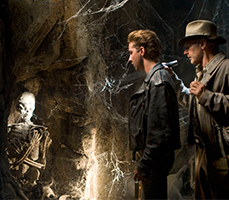
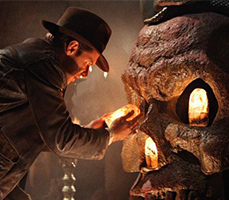
Watch a PreviewWe are concluding our month long celebration of Archaeology Month by examining the true history and archaeology behind Indiana Jones' most recent adventure, Kingdom of the Crystal Skull.
It is the height of the Cold War and Indiana Jones is once again pursuing an artifact that places the freedom of humanity at risk. Find out if the crystal skulls are real. Learn more about the mystery of the Nazca Lines. Hop in your lead-lined fridge as we examine Operation Plumbbob, the nuclear test in which Indy unwillingly participated.
Learn moreDon't forget to celebrate archaeology month by watching each week’s highlighted film! Be sure to print one (or all) of the viewing party posters and send us pictures from your event!
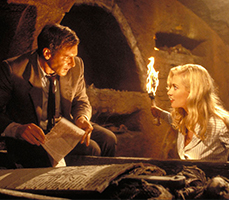
This week we are highlighting the true archaeology and history behind Indiana Jones and the Last Crusade.
Indy's third big screen journey takes him from beautiful Venice to the deserts of Turkey. In a classic showdown of good versus evil, Indy once again races against the Nazis to stop their acquisition of a powerful relic, the Holy Grail. Is the Holy Grail really a cup? Did Coronado have a golden cross? Are the Brothers of the Cruciform Sword real protectors of the grail? Join us as we answer these questions and more!
Learn moreDon't forget to celebrate archaeology month by watching each week’s highlighted film! Be sure to print one (or all) of the viewing party posters and send us pictures from your event!
Proud Supporters of |
![]() |
![]() |
Copyright © 2007- IndyintheClassroom.com
Send questions & comments toWebmasterSite last updated on 5/18/2013This website is owned and operated by EDventure Quest Learning LLC. It is not hosted, operated, endorsed, sponsored by, or affiliated with, Lucasfilm, Ltd., Paramount Pictures, or CBS or any of their affiliates.Indiana Jones and all related indicia are TM & © Lucasfilm Ltd. All rights reserved. COURTESY OF LUCASFILM LTD. |
Disclaimer | Site Map | Search