My First Adventure | Passion for Life | Perils of Cupid
Young Indy Home
Chapter Overview
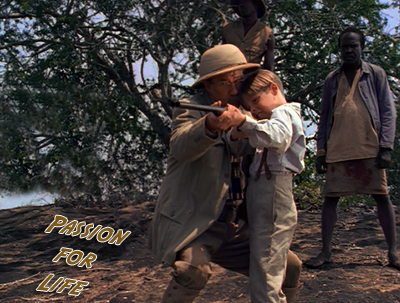
While visiting the Louvre Museum in Paris, nine-year-old Indy meets young Norman Rockwell. Norman offers to show Indy the "real" artists' quarter in Paris, and the two set off on an adventure in Montmartre. In a bohemian café, they find themselves caught up in a humorous scheme of the brash young artist Pablo Picasso to prove to the aging Edgar Degas that Picasso can paint as well as Degas. The boys are invited to the famous banquet at Picasso's studio in honor of Henri Rousseau, and along the way they learn what Cubism is all about.
A year later, Indy and his family meet Theodore Roosevelt, former President of the United States, who is on safari in British East Africa (now Kenya). Roosevelt is on an official expedition sponsored by the Smithsonian Institution to collect specimens for the National Museum in Washington. Indy befriends a Massai boy and learns about the ecology chain from a Massai elder. He helps locate a rare species of antelope that Roosevelt is seeking, but also learns how the enthusiasm for hunting causes the unnecessary slaughter of rare animals.
Key Topics: | “Art appreciation” lessons with iconic painters; lesson in environmental conservation while on safari with Teddy Roosevelt (this film can easily be divided into two separate lessons; each stands alone very well!) |
Historic People: | Theodore Roosevelt-- 26th President of the US, war hero, naturalist, explorer, author, and Nobel Prize recipient. |
People and Topics
DescriptorThe 26th President of the US who is respected as one of the most influential and progressive executives to ever hold office. A well-known naturalist, Roosevelt is remembered for preserving thousands of acres for National Parks & Forests. He is also viewed as the president who brought America into the 20th Century and made it a major player in world trade & politics. BooksDalton, Kathleen. Theodore Roosevelt, A Strenuous Life. New York: Alfred A. Knopf, 2002. Morris, Edmund. Theodore Rex. New York: Modern Library, 2002. Theodore Roosevelt's Diaries of Boyhood and Youth. New York: Charles Scribner's Sons, 1928. Websites |
DescriptorSpanish painter and co-founder of cubism. Often regarded as one of the most recognizable painters of the twentieth century, Picasso's style forever changed the direction of art. His personal life is equally as fascinating and controversial as his art. BooksKarmel, Pepe. Picasso and the Invention of Cubism. New Haven: Yale University Press, 2003. Richardson, John. A Life of Picasso Volume I: 1881-1906. New York: Random House, 1991. Richardson, John. A Life of Picasso Volume II: 1907-1917. New York: Random House, 1996. Websites |
DescriptorIconic American painter best known for his Saturday Evening Post cover illustrations that depicted everyday American life. Rockwell produced more than 4000 original works, most of which were destroyed or are currently in permanent collections. His most well-known illustrations include: BooksClaridge, Laura Norman Rockwell, A Life. New York: Random House, 2001. Finch, Christopher. Norman Rockwell's America. New York: Harry M. Abrams, 1985. Websites |
DescriptorFrench painter and sculptor who was a founder of Impressionism. Degas is best known for his paintings of dancers and dancing, but was skilled at capturing modern life. His most famous paintings include: BooksCarandente, Giovanni Degas. New York: Avenel Books, 1979. Boggs, Jean Sutherland. Artists in Focus: Degas. Chicago: Art Institute of Chicago, 1996. Websites |
DescriptorAs our planet continues to grow and flourish, humans tirelessly innovate and develop technology. Too often we ignore the consequences of progress and damage the very planet we call home. Whether it's destroying an ecosystem or expanding the hole in the Ozone layer, we have a duty to understand our planet and try to save it. BooksPonting, Clive A Green History of the World. New York: Penguin Books, USA Inc., 1991. Fifty Simple Things You Can Do to Save the Earth. Ashland, OR: Earthworks Press, 1989. Websites |
Disclaimer: All resources (including books and websites) provided on indyintheclassroom.com are intended to be used by educators. Indyintheclassroom.com is not responsible for the content on linked websites.
Copyright: All images on Indyintheclassroom.com are used with permission or are in the public domain. Exceptions are noted. For additional information see our Copyright section. |
Documentary Previews
Below you will find information about each documentary that supplements Passion for Life.
Theodore Roosevelt and The American Century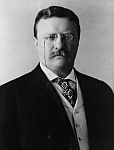 | Known during his time as "the American Lion," Theodore Roosevelt led the U.S. into the 20th Century. He was the first president to travel abroad, the first to travel on an airplane -- a grandiose figure of huge personality, Roosevelt led enough life and followed enough passions for five lifetimes. One of his many legacies is the move towards conserving the nation's abundant natural resources for future generations. Produced and Written by David O'Dell. Running Time: (0:30:50) |
Ecology: Pulse of the Planet | As far as we know, planet Earth stands alone as a cradle of life in the universe. Ecological efforts strive to protect the balance that fosters that life. In this documentary, see the important role humans play as stewards of the planet's health, correcting the mistakes of the past century, with specific examples from northern California. Produced and Written by David O'Dell. Running Time: (0:24:12) |
American Dreams: Norman Rockwell & The Saturday Evening Post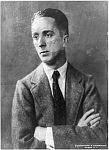 | Perhaps no artist came to capture the optimistic spirit of America in the first half of the 20th Century better than Norman Rockwell. In an era before television became the mass medium that united the nation, Americans turned to the pages of The Saturday Evening Post to learn about themselves and the world abroad. Facing them on the covers of the most popular issues was a perfectly frozen picture of Americana captured by Rockwell. And yet for all his achievements, he never took comfortably to the label "artist." Produced and Written by Mark Page. Running Time: (0:24:17) |
Art Rebellion: The Making of the Modern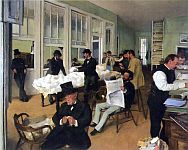 | Paris in the last half of the 19th Century was a city on the move. It was a modern metropolis expanding into the future, with electric lights and steel towers. And yet its art was just as staid as it had been for the past 300 years. None of energy and innovation was translated onto the backwards-looking canvas. But some passionate young artists were about to rise up in revolt, to express an edgy new personal vision that would forever change art and the way we see the modern world. Produced and Written by Mark Page. Running Time: (0:26:06) |
Edgar Degas: Reluctant Rebel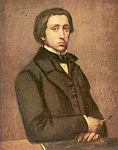 | Among the ranks of fed-up young artists reshaping the world of modern art was Edgar Degas. At the heart of the movement, Degas stood alone as coming from an aristocratic and wealthy family, unlike his more earthy compatriots. Yet he still managed to shock the art world by observing and painting his fellow Parisians in everyday life. His work with the female nude was particularly striking and scandalous, as he never posed his subjects as "classical artists" would. Political and socially conservative, Degas would nonetheless be branded as a rebel for his landmark works. Produced and Written by Mark Page.Produced and Written by Sharon Wood. Running Time: (0:22:53)
|
Braque & Picasso: A Collaboration Cubed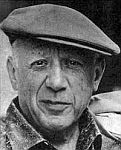 | Enthusiasts of maverick artist Pablo Picasso will readily credit him and him alone for envisioning the bold new form of cubism, but a much quieter yet no less integral artist deserves equal mention. George Braque and Pablo Picasso enjoyed a close, collaborative relationship fueled by competitiveness, as each of their new works served as inspiration for the next great achievement. This documentary examines the relationship between Picasso and Braque and the remarkable outcome of their collaboration. Produced and Written by Mark Page. Running Time: (0:23:14) |
Disclaimer: All resources (including books and websites) provided on indyintheclassroom.com are intended to be used by educators. Indyintheclassroom.com is not responsible for the content on linked websites.
Copyright: All images on Indyintheclassroom.com are used with permission or are in the public domain. Exceptions are noted. For additional information see our Copyright section. |
Indy Connections: Passion for Life
Below are current event articles that relate to events, topics, and people found in Passion for Life.
The National Park Service celebrates its 100th anniversary
usatoday.com
8/25/2016
2016 marks the centennial of the National Park Service, the mission of which is to preserve “unimpaired the natural and cultural resources and values of the National Park System for the enjoyment, education, and inspiration of this and future generations. The Park Service cooperates with partners to extend the benefits of natural and cultural resource conservation and outdoor recreation throughout this country and the world.”
Scientists Uncover a “Hidden” Portrait by Edgar Degas
Smithsonian.com
8/4/2016
For decades, art conservationists have relied on methods like the chemical analysis of miniscule flecks of paint and detailed knowledge of the exact pigments used to restore paintings faded by the years. Now, using a powerful X-ray scanner called a synchrotron, a group of researchers have uncovered an early draft of a portrait by Edgar Degas.
Pope Francis Will Be a Powerful Voice on Climate Change
Nationalgeographic.com
6/19/2015
The first-ever papal encyclical on the environment, though widely anticipated and foreshadowed by earlier Vatican communiqués, still landed with elemental force. The environmental treatise is an emotionally charged, at times scathing look at how humankind has forsaken its stewardship of the earth in favor of a “throwaway culture.” Yet again, Pope Francis has made the most of his bully pulpit.
Why Taxidermy Is Being Revived for the 21st Century
Smithsonian.com
6/19/2015
Ahhh, this polyurethane is setting up too quick,” exclaims Allis Markham, proprietor of Prey Taxidermy in Los Angeles. “Sorry, I’m molding bodies right now,” she adds, apologizing for the interruption in our conversation.
Where Do Important Ivory Artifacts Fit in the Race to Save Elephants from Poaching?
Smithsonian.com
6/18/2015
On Friday June 19 nearly one ton of illegal elephant ivory was crushed in New York City’s Times Square. The public event was intended to make a dramatic statement that the United States will not tolerate trafficking in illegal ivory.
World's Most Ambitious Re-Creation of Prehistoric Cave Art to Open
Nationalgeographic.com
12/19/2014
On a September afternoon in 2013, Gilles Tosello sat sipping a cup of American-style coffee in his Toulouse studio, pondering the talents of cave painters who lived in France 36,000 years ago. Tosello enjoyed a personal connection with those painters because he was the man the French Ministry of Culture and Communication had engaged to re-create their most famous works, some of the oldest, most beautiful, and best preserved cave art on Earth: the images in the Cave of Chauvet-Pont-d'Arc. Its legendary Panel of Horses includes exquisite charcoal horse heads, snarling lions, and battling wooly rhinoceroses drawn across 475 square feet of undulating rock. Even more famous is another tableau he was hired to re-create, the spectacular Lion Panel, 750 square feet of prowling lions, baby mammoths, and charging rhinos. Tosello sighed.
Zimbabwe's Reported Plan to Export Baby Elephants Raises Outcry Against Animal Trade
Nationalgeographic.com
12/17/2014
News that Zimbabwe has captured dozens of baby elephants from the wild and plans to export them overseas ignited a firestorm of alarm in conservation circles, raising new questions about the policies that govern the trade of live elephants. Revelations of the capture came to light late last month in a report by an activist group called Zimbabwe Conservation Task Force.
Why Colors You See in an Art Museum Can’t Be Replicated Today
11/14/2014
When I was 8 and on holiday in France with my parents, we went to Chartres Cathedral, just south of Paris. My father took me by the hand as we both stared at the blue glass casting reflections all over the limestone in the great medieval church.
This Riveting Art From the Front Lines of World War I Has Gone Largely Unseen for Decades
Smithsonian.com
8/12/2014
In the words of one historian, “Art and war are old companions.” The United States government proved that nearly a century ago when it commissioned eight artists to go to war. Armed with sketchpads, charcoals, pastels and little to no military training, the artists embedded with the American Expeditionary Forces and sketched everything from rolling tanks to portraits of German prisoners. The War Department coordinated the program in the hopes that the artists could provide a historical record and galvanize support for the war.
Climate Change Felt in Deep Waters of Antarctica
Smithsonian.com
3/3/2014
In 1974, just a couple years after the launch of the first Landsat satellite, scientists noticed something odd in the Weddell Sea near Antarctica. There was a large ice-free area, called a polynya, in the middle of the ice pack. The polynya, which covered an area as large as New Zealand, reappeared in the winters of 1975 and 1976 but has not been seen since.
Disclaimer: All resources (including books and websites) provided on indyintheclassroom.com are intended to be used by educators. Indyintheclassroom.com is not responsible for the content on linked websites.
Copyright: All images on Indyintheclassroom.com are used with permission or are in the public domain. Exceptions are noted. For additional information see our Copyright section. |
Suggested Lessons

- The Question of an American Empire
- Power of Art
- Horse of a Different Color: An Introduction to Color in the Visual Arts
- What's in a Picture? An Introduction to Subject in the Visual Arts
- Composition in Painting: Everything in its right place
- Norman Rockwell, Freedom of Speech—Know It When You See It
- Picturing America
- Folktales and Ecology: Animals and Humans in Cooperation and Conflict
My First Adventure | Passion for Life | Perils of Cupid
Young Indy Home
Proud Supporters of |
 |
 |
Copyright © 2007- IndyintheClassroom.com
Send questions & comments toWebmasterThis website is owned and operated by EDventure Quest Learning LLC. It is not hosted, operated, endorsed, sponsored by, or affiliated with, Lucasfilm, Ltd., Paramount Pictures, or CBS or any of their affiliates. Indiana Jones and all related indicia are TM & © Lucasfilm Ltd. All rights reserved. COURTESY OF LUCASFILM LTD. |
Disclaimer | Site Map | Search