Spring Break Adventure | Love's Sweet Song | Trenches of Hell
Young Indy Home
Chapter Overview
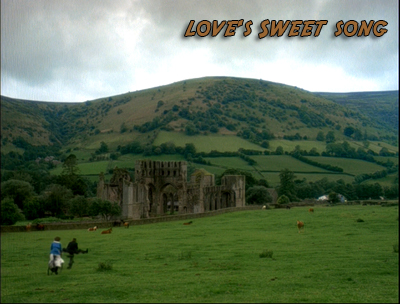
Indiana Jones finds that love and politics don't mix when he visits the British Isles. Landing in Ireland right before the Easter Rebellion, Indy mixes romance and revolutionary politics when he falls for beautiful young Colleen whose brother is mixed up in the Irish resistance movement. Across the waters in England he encounters a similar problem when his love affair with a strong-willed young woman is derailed by her fervent belief in the women's suffrage movement and her need for independence. Desperate street brawls, a terrifying Zeppelin raid and a seriocomic dinner party with Winston Churchill provide plenty of thrills in this exciting romantic adventure. Guest stars include Elizabeth Hurley and Academy Award-winning actress Vanessa Redgrave.
Key Topics: | The Easter Rebellion; London Zeppelin raids and the Suffragette movement |
Historic People: | W.B. Yeats—Dublin-born poet |
People and Topics
DescriptorDublin-born poet and dramatist who won the Nobel Prize for Literature in 1923. Yeats was a pillar in the Irish Literary Revival of the early twentieth century. Famous works include: The Second Coming (1920), The Tower (1928), and The Winding Stair and Other Poems (1929). BooksFoster, R.F. W.B. Yeats: A Life. Vol I and II Oxford, NY: Oxford University Press, 1998. Pierce, David. Yeats's Worlds: Ireland, England and the Poetic Imagination. New Haven and London: Yale University Press, 1995. Websites |
DescriptorIrish playwright whose focus on the Irish working class was unprecedented and revolutionary. BooksKrause, David. Sean O'Casey: The Man and His Work. New York: The Macmillan Company, 1960. O'Conner, Garry. Sean O'Casey: A Life. New York: Antheum/Macmillan Publishing Company, 1988. Websites |
DescriptorThe day after Easter 1916 a small group of rebels decided they were done with British rule over Ireland. Attacks on a Post Office and other city buildings led to the deaths of many and the destruction of much of Dublin. Deemed a failure, the Easter Rebellion of 1916 marked the beginning of the end of British rule in Ireland. BooksFoy, Michael, Brian Barton. The Easter Rising. Gloucestershire: Sutton Publishing Limited, 1999. De Rosa, Peter. Rebels: The Irish Rising of 1916. London: Corgi Books, 1991. Websites |
DescriptorFirst Lord of the Admiralty during WWI. Best known for being Prime Minister of Great Britain during WWII. BooksLukacs, John. Churchill: Visionary, Statesman, Historian. New Haven: Yale University Press, 1999. Rubin, Gretchen. Forty Ways to Look at Winston Churchill: A Brief Account of a Long Life. New York: The Random House Ballantine Book Publishing Group, 2003. Websites |
DescriptorMother and daughter team who led the suffrage movement in England. Best known for staging rallies, marches, and taking militant action to promote their cause. BooksMitchell, David. The Fighting Pankhurst. New York: The Macmillan Company, 1967. Pankhurst, E. Sylvia. The Home Front. London: The Cresset Library, 1987. Websites |
DescriptorSocial movement in Britain and the US that sought to grant women the right to vote. Many women rallied, protested, and marched to fight for their rights, but some women sacrificed it all in the fight for equality. Despite all the earlier efforts made by women, it was their services in WWI that revealed the true social value of women. BooksBriggs, Asa. A Social History of England. New York: The Vicking Press, 1984. Keyssar, Alexander. The Right to Vote: The Contested History of Democracy in the United States. New York: Basic Books, 2000. WebsitesSpartacus- American Woman Suffrage Association LOC- American Women's Suffrage Collection American Women's Suffrage Timeline National Archives & Women's Suffrage |
Disclaimer: All resources (including books and websites) provided on indyintheclassroom.com are intended to be used by educators. Indyintheclassroom.com is not responsible for the content on linked websites.
Copyright: All images on Indyintheclassroom.com are used with permission or are in the public domain. Exceptions are noted. For additional information see our Copyright section. |
Documentary Previews
Below you will find information about each documentary that supplements Love's Sweet Song.
1916 Easter Rising: The Poets' Rebellion | Easter, 1916: At noon, Dublin explodes in gunfire as a motley band of Irish rebels takes on the world's most powerful empire. They begin by hijacking a post office. Despite a fierce spirit of independence, the disorganized rebellion failed to capture the heart of the people, who branded it as a reckless, humiliating act of deplorable violence. But in the aftermath of the Rising, the British response to the captured rebels would cement their roles as martyrs and institutionalize the use of violence for political change in Ireland for the remainder of the century. Produced and Written by Karena O'Riordan. Running Time: (0:25:54) |
The Passions of William Butler Yeats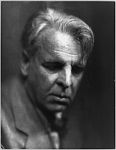 | Up until the early 20th century, contemporary Irish literature barely existed in the world's imagination. Everyone looked to England for great literature. One man changed all that: William Butler Yeats set out to revive Irish literature. Countering the clichés and caricature that was the outward face of Irish culture to the uninitiated, Yeats' poetry and plays drew upon Celtic mythology and unleashed a distinctive Irish voice. The motivations driving this creative force were manifold, but unrequited love was central to Yeats' contributions. Produced and Written by David O'Dell. Running Time: (0:27:43) |
Sean O'Casey vs. Ireland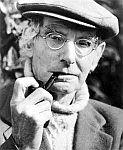 | As Ireland struggled for Independence, writer Sean O'Casey watched the needs of the poor become increasingly overlooked as matters of flag and nation took center-stage. O'Casey bristled at the hypocrisy of pompous speeches, and the jingoistic glory that accompanied fervent nationalism. He questioned what was sacred in Ireland: the words of the priests and the words of the patriots. He questioned these pillars not through editorial or ideology, but by crafting real, human characters that represent such ideas in plays that were embraced by his countrymen. Produced and Written by Karena O'Riordan. Running Time: (0:25:18) |
Ireland: The Power of the Poets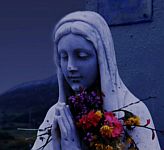 | Poetry is powerful in Ireland. This harsh land, besieged by violence, poverty and strife has produced some of the world's most enduring lyric poets. Since ancient times, Ireland's poets have wielded great power, from the noble bards that accompanied the chieftains to the modern era, where the insight and commentary provided by poets have helped forge social change in the country. This documentary features Irish poets Eavan Boland, Paul Muldoon and Seamus Heaney. Produced and Written by Betsey Bayha. Running Time: (0:26:53) |
Winston Churchill: The Lion's Roar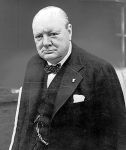 | Brilliant, arrogant and energetic, Winston Churchill led the nation he loved throughout World War II when Britain's very existence was threatened. In the early 1930s, Churchill was an out-of-power politician who many viewed as past his prime, but he saw the threat that Hitler posed to the world. When his prophetic concerns proved true, Churchill became Prime Minister, and his eventful life to that point had well prepared him for the struggle that lay ahead. Produced and Written by Sharon Wood. Running Time: (0:33:47) |
Demanding the Vote: The Pankhursts and British Suffrage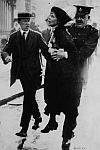 | In 1913, the British government was under assault by its own people who were torching buildings, shattering office windows, and attacking the homes of government leaders. These revolutionaries were frustrated British women furious that their government refused to take them seriously. Their goal was simple: suffrage, the right to vote. But in Victorian England, their request was dismissed as too outrageous to be taken seriously. The press labeled these militant women "suffragettes," and they were led by the fiery Emmeline Pankhurst and her two strong-willed daughters Christabel and Sylvia. The Pankhursts helped alter the political landscape and the perception of women, but in the process, each of them paid a heavy personal price. Produced by Adam Sternberg. Written by Adam Sternberg and Lisa Clark. Running Time: (0:27:07) |
Fighting for the Vote: Women's Suffrage in America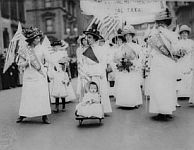 | At the birth of the United States, the Declaration of Independence affirmed the principles and intentions of the country's founders. But when the nation was born, the principles applied almost exclusively to taxpaying property-owning white men. Only they were guaranteed suffrage: the right to vote. The majority of the population could not participate in the government, but that would change. The struggle for women's suffrage in the United States was nothing less than a social revolution. It challenged the established roles of men and women and held the government accountable to the principles on which the country had been founded: liberty and equality for all. Yet few Americans are aware of the effort that the struggle for women's suffrage entailed. Produced and Written by Adam Sternberg and Lisa Clark. Running Time: (0:31:29) |
Disclaimer: All resources (including books and websites) provided on indyintheclassroom.com are intended to be used by educators. Indyintheclassroom.com is not responsible for the content on linked websites.
Copyright: All images on Indyintheclassroom.com are used with permission or are in the public domain. Exceptions are noted. For additional information see our Copyright section. |
Indy Connections: Love’s Sweet Song
Below are current event articles that relate to events, topics, and people found in Love’s Sweet Song.
Anti-suffragette propaganda
mashable.com
9/3/2016
The movement for women’s suffrage began in earnest with the Seneca Falls convention of 1848 and faced fierce resistance for decades. In Britain and the United States, suffragettes calling for the right to vote were regularly arrested and subjected to brutal imprisonment and torture.
It's Easy to Forget That Just Fifty Years Ago, Equality for Women Was a Strange Concept
Smithsonian.com
7/6/2016
In our current moment, stars like Beyoncé, Lena Dunham and Taylor Swift tweet their feminism loud and proud, Hillary Clinton stands a very good chance of being elected president, Facebook’s Sheryl Sandberg urges women to “lean in,” and Nigerian novelist Chimamanda Ngozi Adichie’s TED talk “Why We Should All Be Feminists” has been viewed 2.9 million times. Which makes it hard to believe that not all that long ago a woman needed a man to get a credit card, emplorers advertised for "male" and "female" jobs, and the only way for a woman to end an unwanted pregnancy was via an illegal, often dangerous back-alley abortion.
The Illustrious History of Misquoting Winston Churchill
Smithsonian.com
1/1/2015
If I were married to you, I’d put poison in your coffee,” Lady Astor once famously remarked to Winston Churchill. “If I were married to you,” he replied, “I’d drink it.” This month marks 50 years since the death of one of history’s most quotable people. Churchill’s speeches, letters and published works contain an estimated 15 million words—“more than Shakespeare and Dickens combined,” London Mayor (and Churchill biographer) Boris Johnson tells Smithsonian.
Trench Warfare in World War I Was a Smarter Strategy Than You Realize
io9.com
9/22/2014
History remembers trench warfare as wasteful, futile, and uninspired, but in reality it was a deeply thought-out system that underwent constant revision. Here's how it worked during World War I.
Top image: A painting by Captain Kenneth Keith Forbes shows a Canadian 6-inch howitzer supporting British troops in the attack on Thiepval on 16 July 1916 during the Somme offensive. Via Canadian Artillery in Action.
It was around this time 100 years ago that the mobile battlefield along the Western Front ground to a screeching halt — a 440 mile stretch that barely moved in the ensuing four years.
The Legend of What Actually Lived in the "No Man's Land" Between World War I's Trenches
Smithsonian.com
9/8/2014
During World War I, No Man’s Land was both an actual and a metaphorical space. It separated the front lines of the opposing armies and was perhaps the only location where enemy troops could meet without hostility. It was in No Man's Land that the spontaneous Christmas truce of December 1914 took place and where opposing troops might unofficially agree to safely remove their wounded comrades, or even sunbathe on the first days of spring.
First World War: how Telegraph readers saw it
telegraph.co.uk
9/2/2014
Everyone knows about the horrors of life in the trenches of the First World War, but it’s only recently that the anxieties of people back home in Britain have started to be talked about.
At long last, those feelings are being aired more widely, thanks to a new anthology of letters written, at the time, to The Daily Telegraph. The message these missives impart is of a nation that was desperate to provide support, of any kind, to our brave boys fighting on just the other side of the Channel.
This Riveting Art From the Front Lines of World War I Has Gone Largely Unseen for Decades
Smithsonian.com
8/12/2014
In the words of one historian, “Art and war are old companions.” The United States government proved that nearly a century ago when it commissioned eight artists to go to war. Armed with sketchpads, charcoals, pastels and little to no military training, the artists embedded with the American Expeditionary Forces and sketched everything from rolling tanks to portraits of German prisoners. The War Department coordinated the program in the hopes that the artists could provide a historical record and galvanize support for the war.
First World War centenary: how the events of August 2 1914 unfolded
telegraph.co.uk
8/2/2014
Britain went to war on August 4 1914. In the second part of a four-day series, we document the dramatic events leading up to the declaration of war as they happened, hour-by-hour.
We all know the classic First World War films - but what of flops and political embarrassments?
independent.co.uk
5/28/2014
Movie legends including Charlie Chaplin, Stanley Kubrick and Steven Spielberg have attempted to tackle the First World War, but while some have achieved Oscars and box-office success, others have delayed peace talks and enraged renowned world leaders. One of the most famous films, A Farewell to Arms (1932), directed by Frank Borzage, has been digitally restored and is due for re-release in UK cinemas tomorrow.
The ten men who shaped the road to war
independent.ie
5/10/2014
1 HORATIO KITCHENER As the first British troops marched whistling off to the front in autumn 1914 the cliche of the hour was: "It'll be all over by Christmas." An experienced campaigner on three continents, Horatio Kitchener from Ballylongford, Co Kerry, knew it would be a long haul. As Secretary of State for War he put together the largest volunteer army the world had ever seen, and put industrial production on an efficient war footing.
Disclaimer: All resources (including books and websites) provided on indyintheclassroom.com are intended to be used by educators. Indyintheclassroom.com is not responsible for the content on linked websites.
Copyright: All images on Indyintheclassroom.com are used with permission or are in the public domain. Exceptions are noted. For additional information see our Copyright section. |
Suggested Lessons

- Women's Suffrage: Why the West First?
- Voting Rights for Women: Pro- and Anti-Suffrage
- The Women's Declaration of Independence: The Seneca Falls Convention
- Women's Equality: Changing Attitudes and Beliefs
- Who Were the Foremothers of Women's Equality?
- Charlotte Perkins Gilman's "The Yellow Wall-paper"—Writing Women
Spring Break Adventure | Love's Sweet Song | Trenches of Hell
Young Indy Home
Proud Supporters of |
 |
 |
Copyright © 2007- IndyintheClassroom.com
Send questions & comments toWebmasterThis website is owned and operated by EDventure Quest Learning LLC. It is not hosted, operated, endorsed, sponsored by, or affiliated with, Lucasfilm, Ltd., Paramount Pictures, or CBS or any of their affiliates. Indiana Jones and all related indicia are TM & © Lucasfilm Ltd. All rights reserved. COURTESY OF LUCASFILM LTD. |
Disclaimer | Site Map | Search