My First Adventure | Passion for Life
Young Indy Home
Chapter Overview
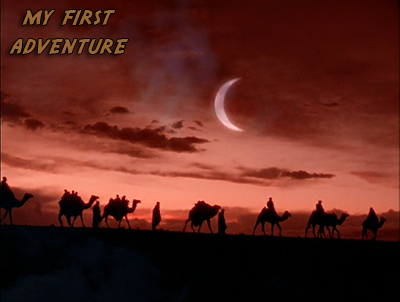
From the ancient pyramids of Egypt to the exotic bazaars of Morocco, Indiana Jones finds excitement, danger and adventure at every turn. While on an archaeological dig in Egypt’s Valley of the Kings, Indy uncovers an ancient mummy and a fresh corpse. With the help of T.E. Lawrence, the legendary Lawrence of Arabia, Indy solves an intriguing murder mystery only to find himself thrust right back into danger when he is kidnapped by slave-trading brigands. Dragged on a terrifying journey across the burning sands of North Africa to the slave markets of Marrakesh, Indy finds that he must rely on his courage and wits to survive the brutal ordeal
Key Topics: | Howard Carter’s work in the Valley of the Kings; slave markets of Marrakesh |
Historic People: | T.E. Lawrence-- (Lawrence of Arabia) scholar, archaeologist, diplomat and British military hero |
People and Topics
DescriptorOne of the greatest archaeological discoveries of all time. Revealed much about Ancient Egyptian culture and led to a revival of interest in Ancient Egypt. BooksCarter, Howard. The Tomb of Tutankhamen. Great Britain: Excalibur Books, 1954. Hoving, Thomas. Tutankhamun: The Untold Story. New York: Simon & Schuster, 1978. Burton, Harry. Wonderful Things: The Discovery of Tutankhamun's Tomb. New York: The Metropolitan Museum of Art, 1976. WebsitesCenter for Archaeological Research |
DescriptorBritish archaeologist who discovered the tomb of King Tut and ushered in a new era of archaeology with his dedication to conservation and study of finds. BooksReeves, Nicholas, John H. Taylor. Howard Carter Before Tutankhamun. New York: Harry M. Abrams, 1992. Hoving, Thomas. Tutankhamun: The Untold Story. New York: Simon & Schuster, 1978. Websites |
DescriptorScholar, archaeologist, diplomat and British military hero whose famous exploits forever made him Lawrence of Arabia. Beginning in 1911, Lawrence studied Arabic and archaeology in the Middle East. When war broke out, his knowledge of Arabic and Middle Eastern geography made him an invaluable part of the British Army. The relationships he forged earlier allowed him to serve as a trusted diplomat to Arabs during and after the war. BooksLawrence, T.E. Seven Pillars of Wisdom: A Triumph. London: Jonathan Cape Publishers, 1936. Wilson, Jeremy. Lawrence of Arabia, The Authorised Biography. London: Heinemann, 1989. Websites |
DescriptorSlavery exists when a person's individual freedoms are denied and they are forced to labor with no compensation. Slavery has existed throughout the world since before recorded history and even though it is currently outlawed in most countries, slavery remains a popular labor source in many parts of the world. African slaves, the resulting slave trade, and antebellum plantations are typically what most Westerners think of when it comes to slavery. However, it is important to remember that slavery existed in Africa long before the Atlantic Slave Trade. Examples of early African slavery include: Ancient Romans enslaving Carthaginians, African tribes enslaving each other, and Muslims enslaving Africans and selling them across Asia. BooksEverest, Suzanne. History of Slavery. Secaucus, New Jersey: Chartwell House, 1996. Bales, Kevin. Disposable People. Berkeley: University of California Press, 1999. Websites |
DescriptorAncient Egypt was a civilization that flourished in the Nile Region of North Africa between 3,000 B.C. and 31 B.C. Much like the Romans, the Ancient Egyptians developed a complex society that still fascinates us today. Whether it's mummification, pyramids, hieroglyphics, architecture, or medicine, the Ancient Egyptians left behind a legacy that historians and archaeologists will continue to marvel over for centuries to come. BooksLehner, Mark. The Complete Pyramids. London: Thames & Hudson, 1997. Bard, KA. Encyclopedia of the Archaeology of Ancient Egypt. NY, NY: Routledge, 1999. WebsitesCenter for Archaeological Research |
Disclaimer: All resources (including books and websites) provided on indyintheclassroom.com are intended to be used by educators. Indyintheclassroom.com is not responsible for the content on linked websites.
Copyright: All images on Indyintheclassroom.com are used with permission or are in the public domain. Exceptions are noted. For additional information see our Copyright section. |
Documentary Previews
Below you will find information about each documentary that supplements My First Adventure.
Archaeology: Unearthing Our Past | Man's history on Earth dates back at least tens of thousands of years, yet written records stretch back to only a fraction of that. Helping clarify the picture of humanity past is the science of archaeology. Though the cinematic escapades of Indiana Jones describe a world of globe-trotting adventure, in truth archaeologists are more like detectives, piecing together clues to mysteries of what has come before. Produced and written by Adam Sternberg.. Running Time: (0:19:17) |
Howard Carter and the Tomb of Tutankhamun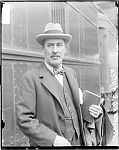 | Howard Carter's unflagging persistence and stubbornness led to one of the greatest archaeological discoveries of the 20th century: the tomb of King Tut. Yet it was that same strong-headedness that would time and again jeopardize Carter's career. Learn more about the man and his discovery which propelled Egyptology into the pop culture landscape. Produced and written by Adam Sternberg.. Running Time: (0:22:34) |
Colonel Lawrence's War: T.E. Lawrence and Arabia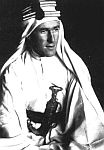 | He was an action hero as well as an intellectual hero. T.E. Lawrence escaped a safe office job during World War I to become a guerilla war mastermind in desert combat, fighting alongside Arabs to throw off the rule of the Ottoman Empire. But despite British promises of Arab independence, the Middle East would end up being carved by European colonial treaties, and Lawrence faced the challenges of keeping his word to his trusted compatriots of the desert. Produced and written by Sharon Wood.. Running Time: (0:36:05) This documentary is also available with the bonus features for Chapter 15: Daredevil's of the Desert |
From Slavery to Freedom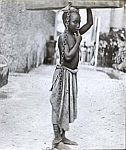 | Humanity has lived in, with and on the profits of slavery for most of its history. Many of its greatest achievements and monuments have tragically been built on the backs of slave labor. How could people place their economic needs ahead of the humanity of their fellow beings? How could this horrific system have lasted for so long? In this documentary track the history of slavery from Ancient Greece, to the Crusades, to the colonization of the new world and the racial slavery that sparked the American Civil War. The journey from slavery to freedom is incomplete and continues as there are still over 20 million people enslaved today. Produced and written by Mark Page. . Running Time: (0:30:08) |
Disclaimer: All resources (including books and websites) provided on indyintheclassroom.com are intended to be used by educators. Indyintheclassroom.com is not responsible for the content on linked websites.
Copyright: All images on Indyintheclassroom.com are used with permission or are in the public domain. Exceptions are noted. For additional information see our Copyright section. |
Indy Connections: My First Adventure
Below are current event articles that relate to events, topics, and people found in My First Adventure.
Archaeologists have uncovered a massive palace at the legendary birthplace of King Arthur
sciencealert.com
8/5/2016
British archaeologists have reported the discovery of massive walls that appear to be part of a Dark Ages palace complex that existed around the same time and place as King Arthur’s birthplace in the famous legend of Camelot.
The Discovery of a Roman Gladiator School Brings the Famed Fighters Back to Life
Smithsonian.com
7/1/2016
Wolfgang Neubauer stands in the grassy clearing and watches a drone soar low over distant stands of birch and white poplar, the leaves still speckled with overnight rain. Vast fields of wheat roll away north and south under a huge dome of sky. “I’m interested in what lies hidden beneath this landscape,” says the Austrian archaeologist. “I hunt for structures now invisible to the human eye.”
How a German Archaeologist Rediscovered in Iran the Tomb of Cyrus
Smithsonian.com
2/16/2016
Alexander the Great rode into the city of Pasargadae with his most elite cavalry in their bronze, muscle-sculpted body armor, carrying long spears. Some of his infantry and archers followed. The small city, in what is today Iran, was lush and green. Alexander had recently conquered India. Greece, Macedonia, Asia Minor and parts of Egypt were all part of his new empire. The people of Pasargadae likely expected the worst—when the world's most dangerous cavalry shows up on your street, you are probably going to have a bad day. But he hadn't come to fight (the city was already his).
Ancient Man Had Neanderthal Great-Great Grandfather
Nationalgeographic.com
6/22/2015
A modern human who lived in what is now Romania between 37,000 and 42,000 years ago had at least one Neanderthal ancestor as little as four generations back—which is to say, a great-great-grandparent.
Britain sets up 'Indiana Jones' teams to rescue relics from the ISIS barbarians threatening to destroy them forever
dailymail.co.uk
6/20/2015
Britain is to fund a new corps of Indiana Jones-style ‘rescue archaeologists’ to salvage historic sites from Islamic State’s rampage across the Middle East.
Cyber-archeology May be the Way to Remember Artifacts Destroyed by Militants
Smithsonian.com
5/22/2015
When ISIS bulldozed the 3,000 year-old city of Nimrud, countless artifacts were lost. There are clandestine groups working to halt the destruction of Iraqi heritage through education and smuggling, while nearby countries are guarding what they can. But now many fear that all that remains of Nimrud’s impressive winged bull statues, intricate relief carvings and ancient walls are photos. Still, even those photos can be valuable. Archaeologists are using those images to create 3D reconstructions that can be studied digitally, reports Jonathan Webb for BBC News.
Only a Handful of People Can Enter the Chauvet Cave Each Year. Our Reporter Was One of Them.
Smithsonian.com
4/14/2015
The entry into the depths of the Chauvet Cave, the world’s greatest repository of Palaeolithic art, begins with a dramatic ascent. A steep switchback trail through a forest brings one to the foot of a limestone cliff. From here a wood-plank walkway leads to a steel door. Behind it, sealed from outsiders by four secure locks- including a biometric lock accessible by only four conservators - lies a time capsule that remained hidden from the world for 35,000 years.
Planned Afghan Cultural Center Will Honor Ancient Statues Destroyed by the Taliban
Smithsonian.com
4/6/2015
In March 2001, the Taliban destroyed two ancient, colossal Buddha statues that towered above Afghanistan’s Bamiyan Valley. The statues, carved about 1,500 years ago by monks and considered the largest of their kind in the world, were integral not only to Buddhism (one even contained relics from the Buddha himself) but also to local culture. “The statues symbolised Bamiyan,” Mullah Sayed Ahmed-Hussein Hanif told The Guardian, even though locals (now mostly Muslim) “had completely forgotten they were figures of the Buddha,” said Hamid Jalya, head of historical monuments in Bamiyan province, to the news outlet.
Finding This Lost City in Honduras Was the Easy Part
nytimes.com
3/20/2015
RIGHT now, in the jungle some 50 miles inland from the Mosquito Coast of Honduras, sits an astounding cache of ancient artifacts, until this month most likely unseen by human eyes for somewhere between 600 and 1,000 years. I traveled there three weeks ago with a team of archaeologists, anthropologists, ethnobotanists, filmmakers and Honduran soldiers, who were following up on lidar images — a laser-based aerial surveillance technology — that suggested the presence of ruins.
Oldest Human Fossil Unearthed in Ethiopia
Smithsonian.com
3/4/2015
One January morning in 2013, while climbing an eroded hill in Ethiopia’s Afar region, Calachew Seeyoum came across a broken tooth. The graduate student knew at once that it was a fossil, and it was important. The thick enamel was a surefire sign that the premolar had come from one of our extinct hominid relatives. Squatting in the silty soil, Seeyoum found more teeth and half a lower jaw that confirmed his first impression.
Disclaimer: All resources (including books and websites) provided on indyintheclassroom.com are intended to be used by educators. Indyintheclassroom.com is not responsible for the content on linked websites.
Copyright: All images on Indyintheclassroom.com are used with permission or are in the public domain. Exceptions are noted. For additional information see our Copyright section. |
Suggested Lessons

- Traces: Historic Archaeology
- Slavery and the American Founding: The “Inconsistency not to be excused”
- The Growing Crisis of Sectionalism in Antebellum America: A House Dividing
- Taking Up Arms and the Challenge of Slavery in the Revolutionary Era
- Slavery, the Crisis of the Union, the Civil War, and Reconstruction
- From Courage to Freedom: Frederick Douglass's 1845 Autobiography
- Slave Narratives: Constructing U.S. History Through Analyzing Primary Sources
- Perspective on the Slave Narrative
- Egypt's Pyramids: Monuments with a Message
- Egyptian Symbols and Figures: Hieroglyphs
- The Cuneiform Writing System in Ancient Mesopotamia: Emergence and Evolution
- Lascaux: La Vie en Caverne!
My First Adventure | Passion for Life
Young Indy Home
Proud Supporters of |
 |
 |
Copyright © 2007- IndyintheClassroom.com
Send questions & comments toWebmasterThis website is owned and operated by EDventure Quest Learning LLC. It is not hosted, operated, endorsed, sponsored by, or affiliated with, Lucasfilm, Ltd., Paramount Pictures, or CBS or any of their affiliates. Indiana Jones and all related indicia are TM & © Lucasfilm Ltd. All rights reserved. COURTESY OF LUCASFILM LTD. |
Disclaimer | Site Map | Search