Demons of Deception | Phantom Train of Doom | Oganga: The Giver & Taker of Life
Young Indy Home
Chapter Overview
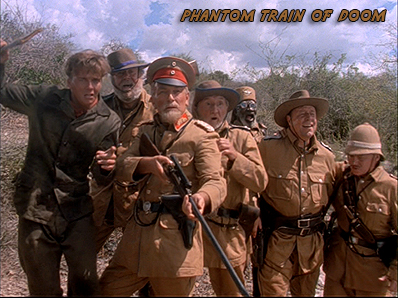
The futility of the Western Front convinces Indy to request transfer to Africa, where he hopes the war has more meaning and movement. Once in Africa, the familiarities of trenches have no time to sink in as Indy is sent on a mission to find the elusive and destructive Phantom Train of Doom. To accomplish his mission, Indy teams up with some of the allies, older, but wilier leaders in this fast-paced adventure that takes Indy and his cohorts all over East Africa. In true Indy fashion the group slips behind enemy lines to fire off the Phantom Train one last time.
Elusive targets seem to be a forte for Indy as he is quickly sent off to track down and capture the foxy German General, Paul von Lettow-Vorbeck. Whether by carriage, hot air balloon, or on foot, Indy manages to overcome the harsh African terrain to capture the General, only to face giant termites, lions, natives… and his father?
Key Topics: | World War I in Africa; German Artillery |
Historic People: | Paul von Lettow-Vorbeck-- German commander in Africa whose guerilla tactics kept the allies trailing him throughout the war. |
People and Topics
DescriptorGerman commander in Africa whose guerilla and elusive tactics kept the allies trailing him throughout the war. Vorbeck knew that the Africa Campaign was merely a "sideshow" to the Western Front and became determined to do everything he could to tie the British down in Africa. This effort removed British soldiers and precious supplies from Europe. Vorbeck is hailed as the only German General to emerge from WWI undefeated. BooksVon Lettow-Vorbeck, Paul. My Reminincenses of East Africa: The Campaign for German East Africa in World War I. Nashville: Battery Classics. Strachan, Hew. The First World War in Africa. New York: Oxford University Press, 2004.
|
DescriptorSouth African military leader who led British soldiers in East Africa during WWI and later served in Britain's War Cabinet under Winston Churchill during WWII. Revered as a hero, Smuts twice served as Prime Minister of his native South Africa. Smuts is often remembered as a white supremacist in South Africa, however, it was his support against racial segregation that pushed him out of office and led to new leadership that ushered in the era of apartheid. Smuts' roles in white supremacy and apartheid continue to spark debate. BooksCameron, Trewhella. Jan Smuts: An Illustrated Biography. Capetown: Human & Rousseau Ltd., 1994. Hancock, W.K. Smuts: The Sanguine Years, 1870-1919. London: Cambridge University, 1962.
|
DescriptorFamed African hunter and conservationist. Selous' exploits in South Africa inspired H. Rider Haggard to create the character Allan Quartermain for his novel King Solomon's Mines and its numerous prequels/sequels. The character of Allan Quartermain was portrayed by Sean Connery in the 2003 film, The League of Extraordinary Gentlemen. BooksCasada, James A, ed. Africa's Greatest Hunter: The Lost Writings of Frederick C. Selous. Long Beach: Safari Press, 1998. Taylor, Stephen. The Mighty Nimrod: A Life of Frederick Courteney Selous. London: William Collins Sons and Co., Ltd., 1989. Websites |
Disclaimer: All resources (including books and websites) provided on indyintheclassroom.com are intended to be used by educators. Indyintheclassroom.com is not responsible for the content on linked websites.
Copyright: All images on Indyintheclassroom.com are used with permission or are in the public domain. Exceptions are noted. For additional information see our Copyright section. |
Documentary Previews
Below you will find information about each documentary that supplements Phantom Train of Doom.
Chasing the Phantom: Paul von Lettow-Vorbeck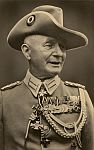 | The war in East Africa was far different from the hell of the Western Front. The stories that emerged there had a human dimension, where individuals could actually put their imprint on this war. One of the most memorable and notable legends to emerge was German Colonel Paul von Lettow-Vorbeck, who led his German troops in a game of cat and mouse against the British over hundreds of miles of harsh African terrain, a game von Lettow had nearly always won. Produced and written by Karena O'Riordan. Running Time: (0:24:53) |
Dreaming of Africa: The Life of Frederick Selous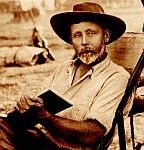 | Frederick Selous was a hunter, explorer, and celebrated author. Most of all, he was the envy of thrill-seekers everywhere, who coveted his life of mystery and danger. So large a figure was he that no less than Theodore Roosevelt considered him a hero. But when Selous first set foot in Africa decades earlier, he was a lost teenager with a big dream of finding adventure on the African continent. He had no idea what lay ahead. Produced and written by Karena O'Riordan. Running Time: (0:25:06) |
At Home and Abroad: The Two Faces of Jan Smuts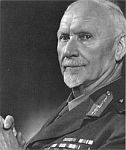 | As the only man to sign both the Treaty of Versailles at the end of World War I and the Paris Peace Treaty that brought an end to World War II, Jan Christiaan Smuts was a voice for democracy and freedom. He also helped draft the charter of the United Nations. But back in his native South Africa, Smuts' policies were anything but forward-thinking. This man gifted with insight and charisma did not use these talents to push for a more inclusive racial vision, which could have saved the country decades of trauma and strife. Produced by Adam Sternberg. Written by Adam Sternberg and Lisa Clark. Running Time: (0:32:16) |
Disclaimer: All resources (including books and websites) provided on indyintheclassroom.com are intended to be used by educators. Indyintheclassroom.com is not responsible for the content on linked websites.
Copyright: All images on Indyintheclassroom.com are used with permission or are in the public domain. Exceptions are noted. For additional information see our Copyright section. |
Indy Connections: Phantom Train of Doom
Below are current event articles that relate to events, topics, and people found in Phantom Train of Doom.
The Most Loved and Hated Novel About World War I
Smithsonian.com
6/16/2015
On December 5, 1930, just over 12 years after the end of World War I, German moviegoers flocked to Berlin’s Mozart Hall to see one of Hollywood’s latest films. But during the movie, a cadre of 150 Nazi Brownshirts, nearly all too young to have fought in World War I, were led into the theater by propagandist Joseph Goebbels. Spewing anti-Semitic invective at the screen, they repeatedly shouted “Judenfilm!” as they tossed stink bombs from the balcony, threw sneezing powder in the air, and released white mice into the theater. A somewhat shocking turn of events, considering the movie was the highly anticipated adaptation of countryman Erich Maria Remarque’s novel All Quiet on the Western Front, the blockbuster novel that had transfixed the nation months earlier.
Sunken Wrecks Of Epic WWI Naval Battle Revealed
news.sky.com
6/16/2015
They show the battered wrecks of several of the 25 warships - 14 of them British - that were blown up during the Battle of Jutland on 31 May, 1916. Among them is HMS Invincible which was torn apart by a German shell, killing more than 1,000 sailors. HMS Defence and HMS Queen Mary were also scanned during the survey.
World War One time capsule discovered in Germany
telegraph.co.uk
11/21/2014
A hundred years after the outbreak of the First World War, builders renovating a historic castle in Germany’s Ruhr valley have found a time capsule that appears to have been left in memory of soldiers who died in the conflict.
Trench Warfare in World War I Was a Smarter Strategy Than You Realize
io9.com
9/22/2014
History remembers trench warfare as wasteful, futile, and uninspired, but in reality it was a deeply thought-out system that underwent constant revision. Here's how it worked during World War I.
Top image: A painting by Captain Kenneth Keith Forbes shows a Canadian 6-inch howitzer supporting British troops in the attack on Thiepval on 16 July 1916 during the Somme offensive. Via Canadian Artillery in Action.
It was around this time 100 years ago that the mobile battlefield along the Western Front ground to a screeching halt — a 440 mile stretch that barely moved in the ensuing four years.
The Legend of What Actually Lived in the "No Man's Land" Between World War I's Trenches
Smithsonian.com
9/8/2014
During World War I, No Man’s Land was both an actual and a metaphorical space. It separated the front lines of the opposing armies and was perhaps the only location where enemy troops could meet without hostility. It was in No Man's Land that the spontaneous Christmas truce of December 1914 took place and where opposing troops might unofficially agree to safely remove their wounded comrades, or even sunbathe on the first days of spring.
First World War: how Telegraph readers saw it
telegraph.co.uk
9/2/2014
Everyone knows about the horrors of life in the trenches of the First World War, but it’s only recently that the anxieties of people back home in Britain have started to be talked about.
At long last, those feelings are being aired more widely, thanks to a new anthology of letters written, at the time, to The Daily Telegraph. The message these missives impart is of a nation that was desperate to provide support, of any kind, to our brave boys fighting on just the other side of the Channel.
The Blockbuster World War I Film that Brought Home the Traumatic Impact of War
Smithsonian.com
8/21/2014
The United States had entered the war with high hopes and dreams—aiming to make the world “safe for democracy” as President Woodrow Wilson would proclaim, but by the 1920s there were strong feelings that the U.S. should never have gotten itself involved in the byzantine affairs of the European powers. Isolationist sentiments grew across the country especially after the rejection of the Versailles Treaty by the U.S. Congress in 1920. These feelings of bitterness and disappointment found their fullest expression in the literature of the day, written by members of what has become known as the “Lost Generation,” most notably John Dos Passos, William Faulkner, F. Scott Fitzgerald and Ernest Hemingway.
This Riveting Art From the Front Lines of World War I Has Gone Largely Unseen for Decades
Smithsonian.com
8/12/2014
In the words of one historian, “Art and war are old companions.” The United States government proved that nearly a century ago when it commissioned eight artists to go to war. Armed with sketchpads, charcoals, pastels and little to no military training, the artists embedded with the American Expeditionary Forces and sketched everything from rolling tanks to portraits of German prisoners. The War Department coordinated the program in the hopes that the artists could provide a historical record and galvanize support for the war.
First World War centenary: how the events of August 2 1914 unfolded
telegraph.co.uk
8/2/2014
Britain went to war on August 4 1914. In the second part of a four-day series, we document the dramatic events leading up to the declaration of war as they happened, hour-by-hour.
A History of the First World War in 100 Moments: ‘We desire no conquest, no dominion. The world must be made safe for democracy’
independent.co.uk
6/5/2014
A light rain was falling on the evening of 2 April 1917 as Woodrow Wilson was driven from the White House to Capitol Hill, escorted by a unit of the United States cavalry, to address a specially convened joint session of Congress. According to contemporary accounts, the 28th president looked pale and nervous. But his words betrayed not the slightest doubt or hesitancy.
Disclaimer: All resources (including books and websites) provided on indyintheclassroom.com are intended to be used by educators. Indyintheclassroom.com is not responsible for the content on linked websites.
Copyright: All images on Indyintheclassroom.com are used with permission or are in the public domain. Exceptions are noted. For additional information see our Copyright section. |
Suggested Lessons
Demons of Deception | Phantom Train of Doom | Oganga: The Giver & Taker of Life
Young Indy Home
Proud Supporters of |
 |
 |
Copyright © 2007- IndyintheClassroom.com
Send questions & comments toWebmasterThis website is owned and operated by EDventure Quest Learning LLC. It is not hosted, operated, endorsed, sponsored by, or affiliated with, Lucasfilm, Ltd., Paramount Pictures, or CBS or any of their affiliates. Indiana Jones and all related indicia are TM & © Lucasfilm Ltd. All rights reserved. COURTESY OF LUCASFILM LTD. |
Disclaimer | Site Map | Search