Treasure of the Peacock's Eye | Winds of Change | Mystery of the Blues
Young Indy Home
Chapter Overview
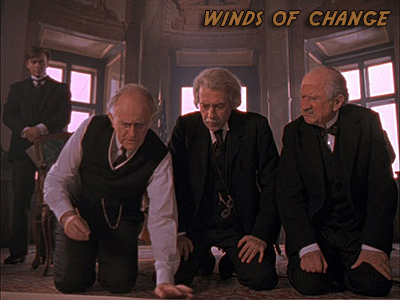
Working as a translator, Indy assists the victors of World War I as they determine the fate of the world and the 20th Century at the Paris Peace Conference. Indy watches with old friend, T.E. Lawrence, as the Treaty of Versailles goes from being a peaceful reconciliation to a document of revenge and hate. Despite Arnold Toynbee's disappointment with the shortcomings of the new treaty and warning of imminent future war, the allied leaders force the Weimar Republic to accept total blame for World War I and sign the treaty. Disillusioned with the state of Europe, Indy returns to America where he faces new challenges with love, his father, and racism.
Key Topics: | Treaty of Versailles; Iraq & the Middle East; Rocketry; Racism |
Historic People: | Woodrow Wilson—American President throughout World War I whose 14 Points failed to create "lasting peace" at the Paris Peace Conference. |
People and Topics
DescriptorAmerican President throughout World War I whose 14 Points failed to create "lasting peace" at the Paris Peace Conference. BooksBrands, H.W. Woodrow Wilson. New York: Times Books, Henry Holt & Company, 2003. Levin, Phyllis Lee. Edith and Woodrow: The Wilson White House. New York: A Lisa Drew Book Scribner, 2001. WebsitesWilson Pres. Library- For Teachers |
DescriptorThe Treaty of Versailles was the peace agreement drafted by the allied powers at the conclusion of WWI. Allied leaders hoped to draft a peace that would end war forever, however, the hatred and punishment that resulted from the treaty failed to create a "lasting peace." In fact, the treaty paved the very road that led to the rise of Fascism, Adolf Hitler, and ultimately World War II. BooksSharp, Alan. The Versailles Settlement: Peacemaking in Paris, 1919. New York: St. Martin's Press, 1991. MacMillan, Margaret. Paris, 1919: Six Months That Changed the World. New York: Random House Trade Paperbacks, 2003. Websites |
DescriptorBritish writer, archaeologist, traveler, and political analyst who, with T.E. Lawrence, reshaped the Middle East. BooksLukitz, Liora. A Quest in the Middle East: Gertrude Bell and the Making of Modern Iraq. New York: Palgrave Macmillan, 2006. Winstone, H.V.F. Gertrude Bell. London: Barzan, 2004. Websites |
DescriptorVietnamese revolutionary who defeated the French Colonials and formed a communist government (actions which led to the American Vietnam War). BooksDuiker, William J. Ho Chi Minh: A Life. New york: Hyperion, 2000. Quinn-Judge, Sophie. Ho Chi Minh: The Missing Years. Berkeley: University of California Press, 2002. Websites |
DescriptorAmerican Civil Rights Activist, actor, and writer. Victim of America's Red Scare (late 1940's & 1950's). BooksBoyle, Sheila Tully, Andrew Bunie. Paul Robeson: The Years of Promise and Achievement. Amherst, MA: University of Massachusetts Press, 2001. Robeson, Paul Jr. The Undiscovered Paul Robeson: An Artist's Journey, 1898-1939. New York: John Wiley & Sons, Inc., 2001. WebsitesPrinceton- Paul Robeson Collection |
DescriptorThe "Father of Modern Rocketry" whose pioneering liquid-fueled rockets paved the way for journeys to the "final frontier." BooksClary, David A. Rocket Man: Robert H. Goddard and the Birth of the Space Age. New York: Hyperion, 2003. Launius, Roger D., Howard E. McCurdy. Imagining Space. San Francisco: Chronicle Books, 2001. WebsitesClark Univ.- Goddard Archives & Papers Discovery.com- Build Your Own Rocket |
Disclaimer: All resources (including books and websites) provided on indyintheclassroom.com are intended to be used by educators. Indyintheclassroom.com is not responsible for the content on linked websites.
Copyright: All images on Indyintheclassroom.com are used with permission or are in the public domain. Exceptions are noted. For additional information see our Copyright section. |
Documentary Previews
Below you will find information about each documentary that supplements The Winds of Change.
The Best Intentions: The Paris Peace Conference and the Treaty of Versailles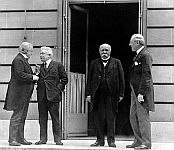 | In May 1919, six months after the end of the Great War in Europe, a French train departed from Berlin, carrying the German delegation to the Paris Peace Conference. The victors decided to meet in Paris to begin the daunting task of rebuilding the world and making a lasting peace settlement with Germany. In a clash of personalities and agendas, facing unimaginable circumstances, the world's leaders met for six months to try to deliver that promise. But just a few years later, their plan for peace would unravel, catapulting the world toward the very tragedy they had wanted to prevent... Was it their fault? Or was it inevitable? Produced and Written by Greg Sirota. Running Time: (0:33:15)
|
Woodrow Wilson: American Idealist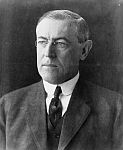 | In 1913, 56 year old Woodrow Wilson was inaugurated President of the United States. He came to the job with little practical experience. Still, he arrived in Washington confident, determined to change America. Just over a year after he assumed office, World War I swept across Europe, and Wilson became committed to not just changing the United States, but to changing the world. Although Wilson didn't live long enough to see his dream of lasting international cooperation become reality, decades after his death, in the somber aftermath of World War II, his ideals once again took center stage. Produced and Written by Adam Sternberg. Running Time: (0:28:41)
|
Gertrude Bell: Iraq's Uncrowned Queen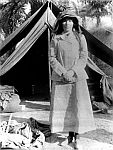 | On March 20, 2003, the United States invaded Iraq. Saddam Hussein, the dictator who'd controlled this nation for nearly 25 years was deposed. Many Iraqis celebrated this turning point. However, before long the troops the Iraqis had greeted as liberators were viewed as occupiers. This wasn't the first time these scenes had played out on the streets of Baghdad. In the aftermath of World War I, the British faced nearly the same situation when they took control. One of those challenged was a fiercely independent archaeologist, map-maker and intelligence officer who'd come to know the region as few westerners had. Her name was Gertrude Bell. Produced and Written by Adam Sternberg. Running Time: (0:33:07)
|
Ho Chi Minh: The Price of Freedom | In the summer of 1966, the United States found itself in a war it couldn't win, against an enemy it didn't understand. For the Americans, it was a war against Communism. But for the Vietnamese, it was a war to break free from centuries of foreign oppression. At this pivotal moment in their history, they were led by one man who would stop at nothing to free his people. They called him Uncle Ho. To the rest of the world, he was Ho Chi Minh. Millions of Vietnamese would pay the price for Ho Chi Minh's vision of a free Vietnam. A vision that was as bold as it was unbreakable. Produced by Karena O'Riordan. Written by Karena O'Riordan and Mike Welt. Running Time: (0:31:01)
|
Paul Robeson: Scandalize My Name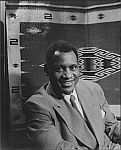 | Paul Robeson was great at everything he did. And he did a lot: an acclaimed singer, actor, all-American football player, Ivy-league educated lawyer, prize-winning orator. Robeson spoke over a dozen languages in a bass-baritone voice that moved people. But when Robeson used that voice to disagree with the political establishment, people turned on him. Produced and Written by Karena O'Riordan. Running Time: (0:32:31) |
Robert Goddard: Mr. Rocket Science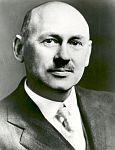 | Since our ancestors first stood on two legs, we've looked up at the universe with wonder. And we've been lighting up the night sky since the Chinese first invented rockets some 2670 years ago. In the early 1900s, American inventor Robert Goddard brought space and rockets together -- and launched a new era in human history. Produced and Written by Sharon Wood. Running Time: (0:31:34)
|
Acknowledgement: Indyintheclassroom.com would like to thank David Schneider of Lucasfilm, Ltd. & JAK Films Inc. for allowing use of the documentary preview featured above. Copyright: The preview featured above is the property of LucasFilm, Ltd. & JAK Films Inc. and may not be copied, downloaded, reproduced, or distributed without permission from the copyright holder. Disclaimer: This website is owned and operated by IndyintheClassroom. It is not hosted, operated, endorsed, sponsored by, or affiliated with, Lucasfilm, Ltd., Paramount Pictures, or CBS or any of their affiliates. Indiana Jones and all related indicia are TM & © Lucasfilm Ltd. All rights reserved. |
Indy Connections: The Winds of Change
Below are current event articles that relate to events, topics, and people found in The Winds of Change.
The Most Loved and Hated Novel About World War I
Smithsonian.com
6/16/2015
On December 5, 1930, just over 12 years after the end of World War I, German moviegoers flocked to Berlin’s Mozart Hall to see one of Hollywood’s latest films. But during the movie, a cadre of 150 Nazi Brownshirts, nearly all too young to have fought in World War I, were led into the theater by propagandist Joseph Goebbels. Spewing anti-Semitic invective at the screen, they repeatedly shouted “Judenfilm!” as they tossed stink bombs from the balcony, threw sneezing powder in the air, and released white mice into the theater. A somewhat shocking turn of events, considering the movie was the highly anticipated adaptation of countryman Erich Maria Remarque’s novel All Quiet on the Western Front, the blockbuster novel that had transfixed the nation months earlier.
Sunken Wrecks Of Epic WWI Naval Battle Revealed
news.sky.com
6/16/2015
They show the battered wrecks of several of the 25 warships - 14 of them British - that were blown up during the Battle of Jutland on 31 May, 1916. Among them is HMS Invincible which was torn apart by a German shell, killing more than 1,000 sailors. HMS Defence and HMS Queen Mary were also scanned during the survey.
Why the Germans Torpedoed the Lusitania
Smithsonian.com
6/9/2015
When German U-boat Commander Walther Schwieger ordered a torpedo strike on the Lusitania, he didn't know it would be the shot that eventually led the U.S. into WWI. But it wasn't a mistake, either.
The Rich and Flavorful History of Chocolate in Space
Smithsonian.com
2/10/2015
You can't drink, you can't smoke and you can't have sex. But there is one human pleasure that's been with astronauts since the dawn of the space age: chocolate.
World War One time capsule discovered in Germany
telegraph.co.uk
11/21/2014
A hundred years after the outbreak of the First World War, builders renovating a historic castle in Germany’s Ruhr valley have found a time capsule that appears to have been left in memory of soldiers who died in the conflict.
What New Zealanders left behind in Arras, France
ww100.govt.nz
9/22/2014
Between 1916 and 1917, the New Zealand Tunnelling Company linked a subterranean system of quarries beneath the Western Front, and named them after New Zealand places to help themselves stay oriented underground.
Originally mined for chalk to build the French town of Arras, the vast network of 200 year-old underground quarries was rediscovered in September 1916. The New Zealand tunnellers were tasked with linking and extending these old quarries in preparation for a major Allied attack on the Germans. Once complete, the quarried spaces would secretly house Allied troops before they took on the enemy in the ‘Battle of Arras’.
Trench Warfare in World War I Was a Smarter Strategy Than You Realize
io9.com
9/22/2014
History remembers trench warfare as wasteful, futile, and uninspired, but in reality it was a deeply thought-out system that underwent constant revision. Here's how it worked during World War I.
Top image: A painting by Captain Kenneth Keith Forbes shows a Canadian 6-inch howitzer supporting British troops in the attack on Thiepval on 16 July 1916 during the Somme offensive. Via Canadian Artillery in Action.
It was around this time 100 years ago that the mobile battlefield along the Western Front ground to a screeching halt — a 440 mile stretch that barely moved in the ensuing four years.
The Legend of What Actually Lived in the "No Man's Land" Between World War I's Trenches
Smithsonian.com
9/8/2014
During World War I, No Man’s Land was both an actual and a metaphorical space. It separated the front lines of the opposing armies and was perhaps the only location where enemy troops could meet without hostility. It was in No Man's Land that the spontaneous Christmas truce of December 1914 took place and where opposing troops might unofficially agree to safely remove their wounded comrades, or even sunbathe on the first days of spring.
First World War: how Telegraph readers saw it
telegraph.co.uk
9/2/2014
Everyone knows about the horrors of life in the trenches of the First World War, but it’s only recently that the anxieties of people back home in Britain have started to be talked about.
At long last, those feelings are being aired more widely, thanks to a new anthology of letters written, at the time, to The Daily Telegraph. The message these missives impart is of a nation that was desperate to provide support, of any kind, to our brave boys fighting on just the other side of the Channel.
The Blockbuster World War I Film that Brought Home the Traumatic Impact of War
Smithsonian.com
8/21/2014
The United States had entered the war with high hopes and dreams—aiming to make the world “safe for democracy” as President Woodrow Wilson would proclaim, but by the 1920s there were strong feelings that the U.S. should never have gotten itself involved in the byzantine affairs of the European powers. Isolationist sentiments grew across the country especially after the rejection of the Versailles Treaty by the U.S. Congress in 1920. These feelings of bitterness and disappointment found their fullest expression in the literature of the day, written by members of what has become known as the “Lost Generation,” most notably John Dos Passos, William Faulkner, F. Scott Fitzgerald and Ernest Hemingway.
Disclaimer: All resources (including books and websites) provided on indyintheclassroom.com are intended to be used by educators. Indyintheclassroom.com is not responsible for the content on linked websites.
Copyright: All images on Indyintheclassroom.com are used with permission or are in the public domain. Exceptions are noted. For additional information see our Copyright section. |
Suggested Lessons

- The Great War: Evaluating the Treaty of Versailles
- The Debate in the United States over the League of Nations
- Woodrow Wilson and Foreign Policy
- From Neutrality to War: The United States and Europe, 1921-1941
- The Gulf of Tonkin Resolution and Escalation of the Vietnam War
- The Origins of the Cold War, 1945-1949
- Anticommunism in Postwar America, 1945-1954: Witch Hunt or Red Menace?
Treasure of the Peacock's Eye | Winds of Change | Mystery of the Blues
Young Indy Home
Proud Supporters of |
 |
 |
Copyright © 2007- IndyintheClassroom.com
Send questions & comments toWebmasterThis website is owned and operated by EDventure Quest Learning LLC. It is not hosted, operated, endorsed, sponsored by, or affiliated with, Lucasfilm, Ltd., Paramount Pictures, or CBS or any of their affiliates. Indiana Jones and all related indicia are TM & © Lucasfilm Ltd. All rights reserved. COURTESY OF LUCASFILM LTD. |
Disclaimer | Site Map | Search