Winds of Change | Mystery of the Blues | Scandal of 1920
Young Indy Home
Chapter Overview
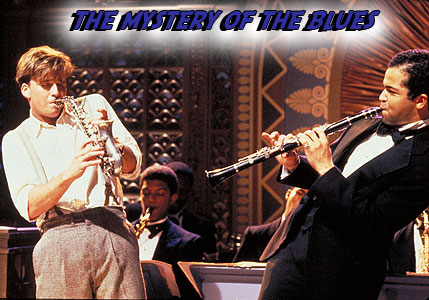
Back in America, Indy enrolls at the University of Chicago and takes up a part-time job at Colosimo's restaurant. His work as a waiter becomes a labor of love as he uses his time at work to enjoy the jazz sounds of Sidney Bechet and his band. Overtaken by the power of Jazz, Indy sneaks out of his college dorm with his roommate Eliot Ness to roam the nighttime streets of Chicago in pursuit of Jazz clubs. A growing friendship with Bechet leads Indy to learn the soprano saxophone and reveals the ever-present racial divide of American society.
The fun of the Roaring Twenties suddenly fades when "Big Jim" Colosimo is murdered in his own restaurant. His mysterious murder serves as a foreshadowing of the organized crime that would plague 1920's Chicago and the Prohibition era. To solve the mystery of "Big Jim's" murder, Indy teams up with old friend Ernest Hemingway only to discover that the lines between law and lawlessness are not as clear as they seem.
Key Topics: | Jazz, Roaring Twenties, Organized Crime, Prohibition, Harlem Hellfighters, Chicago Race Riot of 1919 |
Historic People: | Sidney Bechet—One of Jazz's earliest famed solo artists. Notable instruments include the clarinet and soprano saxophone. |
People and Topics
DescriptorAn American music tradition that blends African and European music traditions into a lively and unique style. Jazz traces its roots to the early 20th Century, but came into its own in Chicago after WWI. Notable performers like Louis Armstrong and Duke Ellington increased the popularity of Jazz, however, it was Prohibition and the growing "need" for excitement that pushed the feel good style of Jazz into the mainstream. BooksChilton, John. Sidney Bechet: The Wizard of Jazz. New York: Da Capo Press, Inc., 1996. Gioia, Ted. The History of Jazz. New York:Oxford University Press, 1998. Websites |
DescriptorNotorious gangster, bootlegger, murderer, and tax evader. Capone is the best known gangster in American history and remains the model for mob bosses everywhere. BooksKobler, John. Capone: The Life and World of Al Capone. New York: Da Capo Press, 2003. Ruth, David E. Inventing the Public Enemy: The Gangster in American Culture, 1918-1934. Chicago: The University of Chicago Press, 1996. Websites |
DescriptorAlso known as the "The Noble Experiment," prohibition was America's attempt at ending lawlessness and crime by taking away alcohol. Prohibition was enacted with the best intentions, however, no one could foresee the organized crime, speakeasies, and ironic lawlessness that it would spark. Gangsters like Al Capone and Bugs Moran smuggled alcohol into Chicago and the US, making millions of dollars and killing hundreds of people in the process. Blood and murder eventually brought Prohibition to an end 13 years after it began. BooksPegram, Thomas R. Battling Demon Rum: The Struggle for a Dry America, 1800- 1933. Chicago: Ivan R. Dee, 1998. Kobler, John. Ardent Spirits: The Rise and Fall of Prohibition. New York: Da Capo Press, 1993. WebsitesNational Archives- Volstead Act Woman's Christian Temperance Union |
DescriptorPassionate and ruthless agent of the Treasury Department who is best known for ending the career of the infamous Al "Scarface" Capone and enforcing prohibition in Chicago with his team of lawmen known as "The Untouchables." BooksHeimel, Paul W. Eliot Ness: The Real Story. Nashville, TN: Cumberland House Publishing, 2000. Ness, Eliot. The Untouchables. Cutchogue, NY: Buccaneer Books, 1957. Websites |
DescriptorKnown for playing the coronet, the trumpet, and being a powerful vocalist, Armstrong redefined Jazz with his innovative ability to improvise and solo. In 1920's Chicago, Armstrong brought Jazz to the mainstream with his fast-paced rhythms and electric personality. He is best remembered for his vocal track on Thiele and Weiss' 1967 release of What a Wonderful World. Armstrong remains an icon of Jazz. BooksGiddins, Gary. Satchmo. New York: Doubleday Press, 1988. Armstrong, Louis. Satchmo: My Life in New Orleans. New York:Prentice-Hall, 1954. Websites |
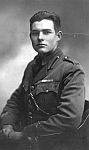
DescriptorWWI veteran, and acclaimed American author who was awarded with the Nobel Prize for Literature and the Pulitzer Prize. Forever battling depression, Hemingway ended his life in 1961. Works include: The Torrents of Spring, The Sun Also Rises, A Farewell to Arms, For Whom the Bell Tolls, and The Old Man and the Sea. BooksHemingway: Life into Art. New York: Cooper Square Press, 2000. Wagner-Martin, Linda, ed. A Historical Guide to Ernest Hemingway. New York:Oxford University Press, Inc., 2000. Reynolds, Michael. The Young Hemingway. New York:W.W. Norton & Company, Inc., 1998. WebsitesHemingway Archive at JFK Library |
DescriptorA Broadway playwright and Hollywood screenwriter. Hecht won two Academy Awards and was nominated a total of six times. Hecht is also remembered for breaking the Ragged Stranger Murder Case while working as a writer for the Chicago Daily News. BooksMacAdams, William. Ben Hecht: A Biography. New York: Barricade Books, Inc., 1990. Fetherling, Doug. The Five Lives of Ben Hecht. Toronto:Lester and Orpen Limited, 1977. Websites |
DescriptorThe all African-American Infantry Regiment (369th Infantry Regiment) of the US Army that saw action in World War I. Despite being one of the most decorated units to serve in WWI, the Hellfighters returned to America only to face the same segregation and inequalities they left behind years earlier. BooksHarris, Bill. The Hellfighters of Harlem: African American Soldiers Who Fought for the Right to Fight for their Country. New York: Carroll & Graf Publishers, 2002. Harris, Stephen L. Harlem's Hellfighters: The African American 369th Infantry in World War I. Washington, DC:Brassey's, Inc., 2003. WebsitesNY Military Museum- Hellfighters Bio |
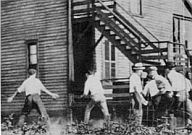
DescriptorOn July 27, 1919 a young African-American named Eugene Williams was swimming with some friends in Lake Michigan. A peaceful afternoon turned violent when Williams strayed into a swimming area reserved for whites. Several white bystanders began throwing rocks and struck Williams, ultimately resulting in his drowning. The Chicago police failed to arrest involved parties despite the reports of numerous eyewitnesses. What followed was a two week long race riot that resulted in 38 deaths and hundreds of destroyed homes. The Chicago riot is considered the worst of the "Red Summer" riots of 1919. BooksWilliam M. Tuttle, Jr. Race Riot: Chicago in the Red Summer of 1919. University of Illinois Press, 1997. Chicago Commission on Race Relations. The Negro in Chicago: A Study of Race Relations and a Race Riot. Chicago: Univ. of Chicago Press, 1922. WebsitesJazz Age Chicago- Race Riot 1919 |
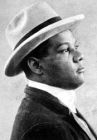
DescriptorSidney Bechet was one jazz's earliest and most influential musicians. Known for his clarinet skills, Bechet was also an accomplished saxophonist and composer. BooksBechet, Sidney. Treat It Gentle: An Autobiography. Da Capo Press; 2nd Edition, 2002. Chilton, John. Sidney Bechet: The Wizard of Jazz. Da Capo Press, 1996. Websites |
Disclaimer: All resources (including books and websites) provided on indyintheclassroom.com are intended to be used by educators. Indyintheclassroom.com is not responsible for the content on linked websites.
Copyright: All images on Indyintheclassroom.com are used with permission or are in the public domain. Exceptions are noted. For additional information see our Copyright section. |
Documentary Previews
Below you will find information about each documentary that supplements The Mystery of the Blues.
Jazz: Rhythm of Freedom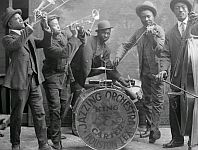 | Jazz was born in America, in cotton fields and cities... in brothels and churches. In the opera house, and the night club... jazz was music of the people. It began as part of a quest for freedom among those who were disenfranchised. From their struggle, it became a platform for self-expression. For more than one hundred years, jazz has been played throughout America, and everywhere it has been played, it has been more than just a style. It has been more than just a technique. It has been a way of liberation through music. Produced and Written by Mike Welt. Running Time: (0:31:55) |
Al "Scarface" Capone: The Original Gangster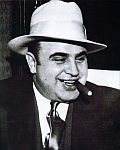 | In the 1920s the sprawling, brawling, skyscraper-studded city of Chicago ruled the American heartland. And one man seemed to rule Chicago. A racketeer, pimp, bootlegger and cold-blooded killer named Al Capone. Capone's empire lasted just six blood-soaked years. But his image as the ultimate American mobster still survives, decades after his days of gangland glory. Produced by Mark Page and Jennifer Petrucelli. Written by Mark Page. Running Time: (0:27:55) |
Prohibition: America on the Rocks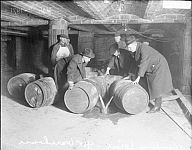 | On October 10th, 1919, for the first time in American history, lawmakers voted to change the Constitution and strip away one of people's personal freedoms. Prohibition, the 18th amendment, outlawed alcohol. Many Americans believed Prohibition --later called the Noble Experiment -- would last forever, bringing the country closer to God and family. Instead, the 14 years under Prohibition are remembered for binge drinking, illegal parties, promiscuity, organized crime, and reckless disrespect for morality and government. Produced and Written by Karena O'Riordan. Running Time: (0:32:44) |
On the Trail of Eliot Ness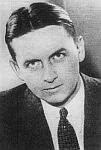 | In the late '20s, gangland killings were tearing Chicago apart, as mob leader Al Capone battled to be top dog. Valentine's Day 1929 was be a bad day to be in Chicago if you worked for the competition. Newly elected President Herbert Hoover was outraged, and declared a war on crime in his inaugural speech. Within months, an elite squad of federal investigators called the Capone Squad, AKA the Untouchables, hit the streets of Chicago. The man in charge was the hard-driving, bright-eyed, and squeaky clean 26 year old, Eliot Ness. Capone's path was clear. He was going straight to hell. But Ness's path took a series of unexpected turns. The man who could track down bad guys with ease, wouldn't always detect the secret malice in people's hearts. Produced by Written by Sharon Wood. Running Time: (0:29:21) |
Louis Armstrong: Ambassador of Jazz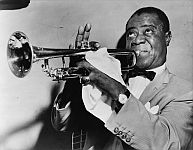 | At the height of his career, Louis Armstrong and his band toured Europe. The sextet had come to perform America's greatest export -- jazz -- but Armstrong's adoring audiences knew him as much more than a musician. He was known as the ambassador of goodwill. Armstrong's joyous stage presence electrified audiences, but many of them didn't know he was the father of jazz itself. He pushed music into the 20th Century by inventing a new way of playing. By doing so, he helped to change the world of music, and the culture we live in, forever. Produced by Written by David O'Dell. Running Time: (0:31:55) |
Ben Hecht: The Shakespeare of Hollywood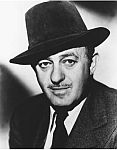 | Chicago in the roaring twenties was a hotbed of activity -- mostly criminal. Mobsters controlled gambling and the flow of alcohol, and they brutally exacted their revenge on their rivals. It was a bloody way of life for gangsters, but newspapermen had a field day. Ben Hecht was a reporter who could find and tell great stories, bringing the harsh realities of Chicago life on to the front page with a human dimension. Exploring the human condition with words would always be important to Hecht, even when he traded the back alleys of Chicago for Hollywood's back-lots, becoming tinsel-town's most respected screenwriter. Produced by Written by David O'Dell. Running Time: (0:31:15) |
Hellfighters: Harlem's Heroes of World War I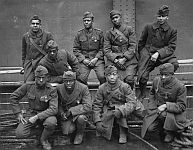 | On July 14, 1919, French, British and American troops paraded down the Champs-Élysées in Paris, celebrating their triumph in the bloody trenches of World War I. But one American regiment was missing from the Allied ranks. It hadn't been sidelined by injury or a poor service record. In fact, the 369th Infantry was one of the most decorated regiments in the war. The men -- nicknamed the Harlem Hellfighters -- were excluded for one simple reason: they were black. Produced and Written by Jennifer Huang and Adam Sternberg. Running Time: (0:29:15) |
Disclaimer: All resources (including books and websites) provided on indyintheclassroom.com are intended to be used by educators. Indyintheclassroom.com is not responsible for the content on linked websites.
Copyright: All images on Indyintheclassroom.com are used with permission or are in the public domain. Exceptions are noted. For additional information see our Copyright section. |
Indy Connections: The Mystery of the Blues
Below are current event articles that relate to events, topics, and people found in The Mystery of the Blues.
The Long-Lasting Legacy of the Great Migration
Smithsonian.com
9/1/2016
In 1963, the American mathematician Edward Lorenz, taking a measure of the earth’s atmosphere in a laboratory that would seem far removed from the social upheavals of the time, set forth the theory that a single “flap of a sea gull’s wings” could redirect the path of a tornado on another continent, that it could, in fact, be “enough to alter the course of the weather forever,” and that, though the theory was then new and untested, “the most recent evidence would seem to favor the sea gulls.”
Keeping the Blues Alive
Smithsonian.com
9/1/2016
It’s a Friday afternoon in Memphis and we’re in the midst of the 32nd annual International Blues Challenge, at a barbecue joint on the legendary Beale Street, where 150 people are waiting for a musician named Redd Velvet. I have been told she’ll be worth the wait, that there may be nothing more important onstage this week. So I’m there when this 40-something black woman walks onstage with a no-frills blue dress and an unmistakably regal bearing. There’s no band behind her. No instrument in her hands. It’s just her and a mike. She sits. Folks in the audience are still chatting, there’s a small din, so Redd looks around the room with piercing eyes, letting you know she’s not talking until it’s quiet. The flock who came to see her says, “Shhh!” The crowd settles down. With that Redd has set a high bar for herself—if you demand everyone to shut up before you start talking, you’d better have something to say.
The Radical Paradox of Martin Luther King’s Devotion to Nonviolence
Smithsonian.com
1/1/2015
First there was the 50th anniversary of the Civil Rights Act last July, one of the central achievements of Martin Luther King Jr.’s crusade. Then, last August, there was what has come to be known simply as “Ferguson,” the bitterness over a killing that reminded us that issues of race, violence and nonviolence are still simmering, still ready to explode at any time. And now in January, a major film called Selma will be released nationwide that dramatizes a key moment in the evolution of King’s struggle.
The Stark Reminders of the Birmingham Church Bombing
Smithsonian.com
11/15/2013
S lounge, in the northeast corner of the basement. Carole Robertson, 14, was the most mature of the girls. She was wearing medium-high heels for the first time, shiny black ones bought the day before. Carole’s mother had gotten her a necklace to go with the shoes and put a winter coat on layaway for her. Also in the lounge was 14-year-old Addie Mae Collins. One of eight children, Addie was a little on the shy side, but she looked radiant in her white usher’s dress. Cynthia and Carole also wore white. The three ushers were standing with young Denise by the window, which looked out onto Sixteenth Street at ground level. So elegant was this church that even the restroom window was made of stained glass.
A Long Toss Back to the Heyday of Negro League Baseball
Smithsonian.com
11/15/2013
Called Organized Baseball was still segregated. I leaned closer, bent an ear, telling myself: Listen carefully, Frank, because this is oral history, this is one of the last times old black and white players will ever be able to speak across that divide of time and race. And, in fact, Feller has passed on since then, although Irvin lives yet, age 94, one of the last survivors of the Negro Leagues—that shadow baseball government that managed to thrive for about a quarter of a century, allowing African-Americans the chance to play the national pastime for pay (if not for much). The heyday of the Negro Leagues was the ’30s, the cynosure of most seasons the East-West All-Star Game, which was usually played in Chicago at Comiskey Park, home of the white White Sox. Indeed, in 1941, just before America entered the war, that fabled season when Ted Williams batted .406 and Joe DiMaggio hit safely in 56 straight games, the Negro League All-Star Game drew a crowd of more than 50,000 fans. Buck Leonard hit a home run, driving in three runs in the game. He was one of the very best baseball players alive, a stocky 5-foot-10, 185-pound first baseman.
Ban Everything: Concern Over Future Blue Laws During the Lead Up to Alcohol Prohibition
3/28/2013
Anytime the government tries to ban something there are usually loud warnings about slippery slopes and guesses as to what perfectly reasonable American past-time might be banned next. If New York City bans trans fats (as it did in 2007), what’s next? Smoking in its parks? Oversized sodas? Oh, right. It banned those things too, with mixed success. Perhaps the most notorious ban in U.S. history was our national experiment in forced sobriety. The United States ratified the 18th Amendment in January of 1919 which outlawed the sale of alcohol and many people were (understandably) not pleased. The one-year gap between the ratification of the amendment and it becoming the enforced law of the land led many people in 1919 to speculate (and joke) about the repercussions.
The History of the Flapper, Part 3: The Rectangular Silhouette
2/19/2013
If a woman in the 1920s had a boyish figure and was naturally skinny, she was all set to slip on a slim sheath, a signature look of the 1920s. But if she was plump and curvaceous, she might choose certain undergarments to help achieve the fashionable unisex flapper shape. The flapper silhouette was distinctive, and if you’re a fan of PBS’s “Downton Abbey,” you’ve seen it in full effect this season: angular (basically rectangular), androgynous, slender and straight. It was influenced by Braque, Picasso, Leger and others artists whose work had hard, geometric forms and visible lines.
The History of the Flapper, Part 2: Makeup Makes a Bold Entrance
Smithsonian.com
2/7/2013
In the decades before the Roaring Twenties, nice girls didn’t wear makeup. But that changed when flappers began applying cosmetics that were meant to be noticed, a reaction to the subdued and feminine pre-war Victorian attitudes and styles typified by the classic Gibson girl. Before the 1920s, makeup was a real pain to put on. It’s no wonder women kept it to a minimum. The tubes, brushes and compacts we take for granted today hadn’t yet been invented. Innovations in cosmetics in the ’20s made it much easier for women to experiment with new looks. And with the increasing popularity of movies, women could mimic the stars—like Joan Crawford, Mae Murray and Clara Bow, an American actress who epitomized the flapper’s spitfire attitude and heavily made-up appearance.
The History of the Flapper, Part 1: A Call for Freedom
Smithsonian.com
2/5/2013
In the age before the Roaring Twenties, women were still wearing floor-length dresses. Waists were cinched. Arms and legs were covered. Corsets were standard on a daily basis. Hair was long. The Gibson girl was the idealized image of beauty. And the Victorian attitudes toward dress and etiquette created a strict moral climate. Then the 1920s hit and things changed rapidly. The 19th Amendment passed in 1920 giving women the right to vote. Women began attending college. The Equal Rights Amendment was proposed by Alice Paul in 1923. World War I was over and men wanted their jobs back. Women, though, who had joined the workforce while the men were at war, had tasted the possibility of life beyond homemaking and weren’t ready to relinquish their jobs. Prohibition was underway with the passing of the 18th Amendment in 1919 and speakeasies were plentiful if you knew where to look. Motion pictures got sound, color and talking sequences. The Charleston’s popularity contributed to a nationwide dance craze. Every day, more women got behind the wheels of cars. And prosperity abounded.
Frank Deford on Bloggers, the Olympics and 51 years of Sportswriting
Smithsonian.com
6/27/2012
In 1961, Frank Deford graduated from Princeton and started writing for Sports Illustrated, a job he thought would be a brief entryway into the world of magazine journalism. More than 50 years later, he’s still at SI and still going strong. His remarkable stories—covering everything from outsized athletic figures to oddball coaches—have led to his being recognized as one of America’s finest sportswriters. Last month, he published his memoir Over Time: My Life as a Sportswriter. He spoke with Smithsonian’s Joseph Stromberg about the luck involved in being a journalist, his thoughts on bloggers and his predictions for this summer’s Olympic Games in London.
Disclaimer: All resources (including books and websites) provided on indyintheclassroom.com are intended to be used by educators. Indyintheclassroom.com is not responsible for the content on linked websites.
Copyright: All images on Indyintheclassroom.com are used with permission or are in the public domain. Exceptions are noted. For additional information see our Copyright section. |
Suggested Lessons

- Jazz and World War II: A Rally to Resistance, A Catalyst for Victory
- Learning the Blues
- Jazz Appreciation Month: JAM
- African-American Soldiers After World War I: Had Race Relations Changed?
- African-American Soldiers in World War I: The 92nd and 93rd Divisions
- Ken Burns- Prohibition
- "Three Shots": Ernest Hemingway's Nick Adams
- Hemingway Adventure
- Martin Luther King, Jr. and Nonviolent Resistance
- Picturing Freedom: Selma-to-Montgomery March, 1965
- The Freedom Riders and the Popular Music of the Civil Rights Movement
Winds of Change | Mystery of the Blues | Scandal of 1920
Young Indy Home
Proud Supporters of |
 |
 |
Copyright © 2007- IndyintheClassroom.com
Send questions & comments toWebmasterThis website is owned and operated by EDventure Quest Learning LLC. It is not hosted, operated, endorsed, sponsored by, or affiliated with, Lucasfilm, Ltd., Paramount Pictures, or CBS or any of their affiliates. Indiana Jones and all related indicia are TM & © Lucasfilm Ltd. All rights reserved. COURTESY OF LUCASFILM LTD. |
Disclaimer | Site Map | Search