Phantom Train | Oganga: The Giver & Taker of Life | Attack of the Hawkmen
Young Indy Home
Chapter Overview
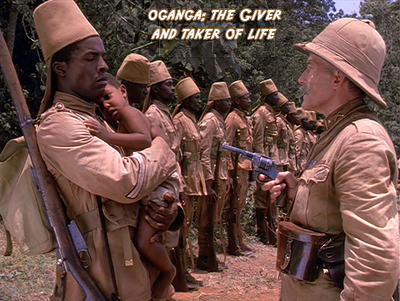
While on mission in Africa, Indy is introduced to the plight of war torn Africa and the abuse of African soldiers by allied commanders. After coming across a village destroyed by disease, Indy discovers a lone surviving African child and endangers the lives of his fellow soldiers when he takes the child into his care. Realizing the futility of war, Indy begins to rethink his support for the Great War. As hope fades, Indy finds Dr. Albert Schweitzer and discovers that there is still good in people and hope for humanity.
Key Topics: | Disease & despair in war-torn Africa; Treatment of colonial soldiers |
Historic People: | Albert Schweitzer-- Theologian, philosopher, and African mission doctor who received the Nobel Prize for Peace in 1952. |
People and Topics
DescriptorTheologian, philosopher, musician, and African mission doctor who received the Nobel Prize for Peace in 1952. BooksSchweitzer, Albert. The Decay And The Restoration Of Civilization. London: Adam & Charles Black, 1923. Brabazon, James. A Biography: Albert Schweitzer. New York: Syracuse University, 2000. Websites |
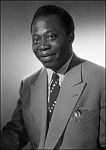
DescriptorAfrican nationalist leader during the decolonization period of the 1950's. After negotiating independence from France, Boganda served as the Central African Republic's first Prime Minister. Also an ordained Roman Catholic priest, Boganda died in 1959 when his airplane mysteriously crashed. BooksKalck, Pierre. Central African Republic: A Failure in De-Colonisation. Translated by Barbara Thomson. London: Pall Mall Press, 1971. Le Vine, Victor T. Politics in Francophone Africa: The States of West and Equatorial Africa. Boulder: Lynne Rienner Publishers, 2004. Websites |
Disclaimer: All resources (including books and websites) provided on indyintheclassroom.com are intended to be used by educators. Indyintheclassroom.com is not responsible for the content on linked websites.
Copyright: All images on Indyintheclassroom.com are used with permission or are in the public domain. Exceptions are noted. For additional information see our Copyright section. |
Documentary Previews
Below you will find information about each documentary that supplements Oganga: The Giver & Taker of Life.
Albert Schweitzer: Reverence for Life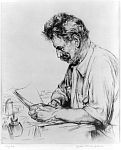 | In 1953, Albert Schweitzer won the Nobel Prize for peace, and magazines and newspaper articles were calling him "the greatest man in the world." He was one of the most unlikely candidates for such accolades -- having spent the majority of his life working as a doctor, tending to the poor in a remote corner of Africa. In addition to being a doctor, Schweitzer was a concert organist and a respected theologian, but it was for uncovering a simple philosophy that he won the Nobel Prize. He called his way of thinking and living "Reverence for Life." Produced and written by David O'Dell. Running Time: (0:29:47) |
Congo: A Curse of Riches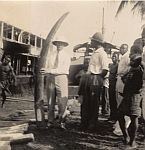 | The Congo encompasses a million square miles of the richest land in Africa. Yet despite that wealth -- or perhaps because of it -- throughout their history the Congolese would nearly starve to death, economically and politically. Their vast riches would bring only suffering, corruption, and death. Produced and written by Karena O'Riordan. Running Time: (0:32:39) |
Waging Peace: The Rise of Pacifism | As the 20th century approached, governments all over Europe were doing their best to win the deadly game of the arms race. But some of their subjects were beginning to fear that if the arms race led to a real war, there would be no victors. Modern weapons, argued the pacifists, had become too powerful, too destructive. If they were unleashed they might destroy Europe and roll back centuries of cultural, scientific and economic progress. Produced and written by Mark Page. Running Time: (0:26:02) |
Disclaimer: All resources (including books and websites) provided on indyintheclassroom.com are intended to be used by educators. Indyintheclassroom.com is not responsible for the content on linked websites.
Copyright: All images on Indyintheclassroom.com are used with permission or are in the public domain. Exceptions are noted. For additional information see our Copyright section. |
Indy Connections: Oganga: The Giver and Taker of Life
Below are current event articles that relate to events, topics, and people found in Oganga: The Giver and Taker of Life.
The Most Loved and Hated Novel About World War I
Smithsonian.com
6/16/2015
On December 5, 1930, just over 12 years after the end of World War I, German moviegoers flocked to Berlin’s Mozart Hall to see one of Hollywood’s latest films. But during the movie, a cadre of 150 Nazi Brownshirts, nearly all too young to have fought in World War I, were led into the theater by propagandist Joseph Goebbels. Spewing anti-Semitic invective at the screen, they repeatedly shouted “Judenfilm!” as they tossed stink bombs from the balcony, threw sneezing powder in the air, and released white mice into the theater. A somewhat shocking turn of events, considering the movie was the highly anticipated adaptation of countryman Erich Maria Remarque’s novel All Quiet on the Western Front, the blockbuster novel that had transfixed the nation months earlier.
Sunken Wrecks Of Epic WWI Naval Battle Revealed
news.sky.com
6/16/2015
They show the battered wrecks of several of the 25 warships - 14 of them British - that were blown up during the Battle of Jutland on 31 May, 1916. Among them is HMS Invincible which was torn apart by a German shell, killing more than 1,000 sailors. HMS Defence and HMS Queen Mary were also scanned during the survey.
World War One time capsule discovered in Germany
telegraph.co.uk
11/21/2014
A hundred years after the outbreak of the First World War, builders renovating a historic castle in Germany’s Ruhr valley have found a time capsule that appears to have been left in memory of soldiers who died in the conflict.
Trench Warfare in World War I Was a Smarter Strategy Than You Realize
io9.com
9/22/2014
History remembers trench warfare as wasteful, futile, and uninspired, but in reality it was a deeply thought-out system that underwent constant revision. Here's how it worked during World War I.
Top image: A painting by Captain Kenneth Keith Forbes shows a Canadian 6-inch howitzer supporting British troops in the attack on Thiepval on 16 July 1916 during the Somme offensive. Via Canadian Artillery in Action.
It was around this time 100 years ago that the mobile battlefield along the Western Front ground to a screeching halt — a 440 mile stretch that barely moved in the ensuing four years.
The Legend of What Actually Lived in the "No Man's Land" Between World War I's Trenches
Smithsonian.com
9/8/2014
During World War I, No Man’s Land was both an actual and a metaphorical space. It separated the front lines of the opposing armies and was perhaps the only location where enemy troops could meet without hostility. It was in No Man's Land that the spontaneous Christmas truce of December 1914 took place and where opposing troops might unofficially agree to safely remove their wounded comrades, or even sunbathe on the first days of spring.
First World War: how Telegraph readers saw it
telegraph.co.uk
9/2/2014
Everyone knows about the horrors of life in the trenches of the First World War, but it’s only recently that the anxieties of people back home in Britain have started to be talked about.
At long last, those feelings are being aired more widely, thanks to a new anthology of letters written, at the time, to The Daily Telegraph. The message these missives impart is of a nation that was desperate to provide support, of any kind, to our brave boys fighting on just the other side of the Channel.
The Blockbuster World War I Film that Brought Home the Traumatic Impact of War
Smithsonian.com
8/21/2014
The United States had entered the war with high hopes and dreams—aiming to make the world “safe for democracy” as President Woodrow Wilson would proclaim, but by the 1920s there were strong feelings that the U.S. should never have gotten itself involved in the byzantine affairs of the European powers. Isolationist sentiments grew across the country especially after the rejection of the Versailles Treaty by the U.S. Congress in 1920. These feelings of bitterness and disappointment found their fullest expression in the literature of the day, written by members of what has become known as the “Lost Generation,” most notably John Dos Passos, William Faulkner, F. Scott Fitzgerald and Ernest Hemingway.
First World War centenary: how the events of August 2 1914 unfolded
telegraph.co.uk
8/2/2014
Britain went to war on August 4 1914. In the second part of a four-day series, we document the dramatic events leading up to the declaration of war as they happened, hour-by-hour.
A History of the First World War in 100 Moments: ‘We desire no conquest, no dominion. The world must be made safe for democracy’
independent.co.uk
6/5/2014
A light rain was falling on the evening of 2 April 1917 as Woodrow Wilson was driven from the White House to Capitol Hill, escorted by a unit of the United States cavalry, to address a specially convened joint session of Congress. According to contemporary accounts, the 28th president looked pale and nervous. But his words betrayed not the slightest doubt or hesitancy.
For men used to mining - fighting in trenches was seen as an escape FROM HELL
express.co.uk
6/1/2014
These days, however, Big Pit digs tourism, not coal; the party descending into the earth are American visitors. There are no working deep-mines remaining in South Wales; already in decline, the area's coalfield was annihilated in the wake of the 1984-5 Miners' Strike, the names of the closed collieries to toll like funeral bells. Mardy. Tower. Deep Navigation. Markham. Lady Windsor. How black was my valley a century ago, on the eve of the Great War, when there were a dozen collieries within sight, and another 600 coal mines across South Wales, employing 232,000 men, who hewed 57 million tons a year, a fifth of the entire output of the United Kingdom. The very earth vibrated to the metronomic percussion of thousands of subterranean men wielding the pick. Coal for the Navy. Coal for industry. Coal for locomotives. Coal for homes.
Disclaimer: All resources (including books and websites) provided on indyintheclassroom.com are intended to be used by educators. Indyintheclassroom.com is not responsible for the content on linked websites.
Copyright: All images on Indyintheclassroom.com are used with permission or are in the public domain. Exceptions are noted. For additional information see our Copyright section. |

Phantom Train | Oganga: The Giver & Taker of Life | Attack of the Hawkmen
Young Indy Home
Proud Supporters of |
 |
 |
Copyright © 2007- IndyintheClassroom.com
Send questions & comments toWebmasterThis website is owned and operated by EDventure Quest Learning LLC. It is not hosted, operated, endorsed, sponsored by, or affiliated with, Lucasfilm, Ltd., Paramount Pictures, or CBS or any of their affiliates. Indiana Jones and all related indicia are TM & © Lucasfilm Ltd. All rights reserved. COURTESY OF LUCASFILM LTD. |
Disclaimer | Site Map | Search