Journey of Radiance | Spring Break Adventure | Love's Sweet Song
Young Indy Home
Chapter Overview
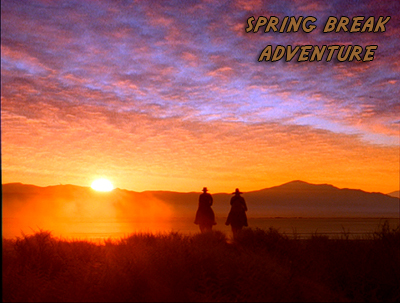
Indy and his girlfriend, Nancy Stratemeyer, whose father created the Nancy Drew mystery series, visit the fascinating laboratory of inventor Thomas Edison. The two must contend with dangerous German spies as they struggle to keep Edison's top-secret invention out of the hands of hostile enemy agents. Following these exploits, Indy is sent to visit his aunt in New Mexico to prevent him from getting into any more trouble. While there, he is kidnapped by Pancho Villa and swept up into the Mexican Revolution. Chaotic, free-wheeling border towns, a "Wild Bunch" style train robbery and a colorful barroom encounter with a young George Patton make for thrilling entertainment in this action-packed movie.
Key Topics: | Significance of Edison; Villa and the Mexican Revolution (this film can easily be divided into two separate lessons; each stands alone very well!) |
Historic People: | Edward Stratemeyer—author of the such popular books series as Tom Swift, The Hardy Boys and Nancy Drew |
People and Topics
DescriptorInventor extraordinaire and holder of over 1000 patents. Known for inventing the light bulb, phonograph, and kinetograph (movie camera). BooksIsrael, Paul. Edison: A Life of Invention. New York: John Wiley & Sons, Inc., 1998. Friedel, Robert, Paul Israel. Edison's Electric Light: Biography of an Invention. New Brunswick, NJ: Rutger's University Press, 1986. Websites |
DescriptorU.S. Army commander who pursued Pancho Villa and later led the American Expeditionary Force during World War I. BooksGoldhurt, Richard. Pipe, Clay, and Drill. John J. Pershing: The Classic American Soldier. New York, NY: Reader's Digest Press, 1977. Smythe, Donald. Pershing: General of the Armies. Bloomington, IN: Indiana University Press, 1986. Websites |
DescriptorU.S. Army General of WWII era best known for his loose tongue and being one of the best tank commanders and tacticians in modern history. BooksD'Este, Carlo. Patton: A Genius for War. New York: Harper Collins Publishers, 1995. Hirshon, Stanley P. General Patton: A Soldier's Life. New York, NY: HarperCollins, 2002. Websites |
DescriptorMexican revolutionary leader who invaded the US (Columbus, New Mexico) in 1916. This action sparked unsuccessful US intervention in the Mexican Revolution and paved the way for the infamous Zimmerman Telegram which pushed America into WWI. BooksEisenhower, John S.D. INTERVENTION! The United States and the Mexican Revolution, 1913-1917. W.W. Norton & Co., 1993. Katz, C. Friedrich. Pancho Villa, His Life and Times. Stanford University Press, 1998. Websites |
DescriptorAuthor of the such popular books series as Tom Swift, The Hardy Boys and Nancy Drew. BooksJohnson, Deidre. Edward Stratemeyer and the Stratemeyer Syndicate. New York: Twayne Publishers/Macmillan Publishing Co., 1993. Kismaric, Carole, Heiferman, Marvin. The Mysterious Case of Nancy Drew & the Hardy Boys. New York: Fireside Simon & Schuster Inc., 1998. Websites |
DescriptorOn March 9, 1916 residents of Columbus, New Mexico awoke to shouts and gunfire. Mexican Revolutionary Pancho Villa had stormed into town seeking precious supplies for his waning army. Unfortunately for Villa, the town had a garrison of over 300 soldiers from the 13th cavalry who quickly defended and pursued Villa, killing 200 of his 500 man force. The US Government used the attack as a justification to invade Mexico in pursuit of Villa. This retaliation is known officially as the "Mexican Expedition," but it's more commonly known as the "Punitive Expedition." BooksStout, Joseph. Border Conflict: Villistas, Carrancistas and the Punitive Expedition, 1915-1920. Texas Christian University Press, 1999. Welsome, Eileen. The General and the Jaguar: Pershing's Hunt for Pancho Villa: A True Story of Revolution and Revenge. Bison Books, 2007. Websites |
DescriptorIt's difficult to trace baseball's true origin because similar games were being played as far back as the 1300's, but the first modern baseball game was played on June 19, 1846 in Hoboken, New Jersey. Since that time, baseball has grown to become one of the most popular and profitable International sports, especially in America where it is considered the national pastime. Baseball has often mirrored and played a major role in American history, particularly in the African-American struggle for civil rights during the 1950's and 1960's. BooksRitter, Lawrence S. The Glory of Their Times: The Story of the Early Days of Baseball Told by the Men Who Played It. Harper, 1992. Dickson, Paul. The Dickson Baseball Dictionary. W.W. Norton, 2009. Websites |
Disclaimer: All resources (including books and websites) provided on indyintheclassroom.com are intended to be used by educators. Indyintheclassroom.com is not responsible for the content on linked websites.
Copyright: All images on Indyintheclassroom.com are used with permission or are in the public domain. Exceptions are noted. For additional information see our Copyright section. |
Documentary Previews
Below you will find information about each documentary that supplements Spring Break Adventure.
Thomas Edison: Lighting Up the World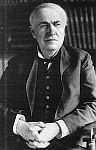 | The country was already singing Thomas Edison's praises for his astonishing invention of the phonograph, but that was just one of his many record-breaking number of patents. His greatest ambition was to illuminate modern life not with gas-lamps, but with electricity. The quest for the electric light bulb was filled with controversy and confrontation, and though Edison won the battle of the bulb, the conflict over current would prove to be the biggest challenge. Produced and Written by Doug Hamilton. Running Time: (0:26:52) |
Invention and Innovation: What's Behind a Good Idea?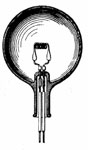 | The US patent office is filled with a seemingly endless array of well-intentioned but ultimately ridiculous ideas for devices meant to make life better. Dog ear-warmers? Protective glasses for chickens? How do you separate a great idea from the rest? What turns an invention to an innovation? This documentary follows modern inventor Dean Kamen as he applies the ingenuity that created the Segway, the mobile dialysis machine, and the iBot, into new territory and new ideas. Produced and Written by Doug Hamilton. Running Time: (0:22:55) |
The Mystery of Edward Stratemeyer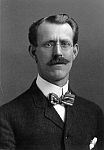 | The characters that Edward Stratemeyer created are some of the most endearing and enduring fictional heroes ever, and yet few know of the author's name. His prolific writing and phenomenal success drove early editors to insist he hide behind pen-names, lest it be known just how much of the volume of these early periodicals was produced by one man. He tapped into the imaginations of children, providing non-stop adventure and excitement, and his creative legacy includes Tom Swift, the Hardy Boys and Nancy Drew. The father of series fiction, Stratemeyer's characters continues to hold young readers spellbound even in this new millennium. Produced and Written by Todd Wagner Running Time: (0:26:15) |
Wanted: Dead or Alive -- Pancho Villa and the American Invasion of Mexico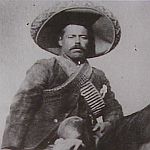 | At least 100 ballads sing his name and his praises, telling tale of a mythical figure: outlaw, bandit, lover, a modern Robin Hood. His image was even carefully crafted by Hollywood so that Americans revered Francisco Villa as a hero. But on March 9, 1916, US troops on the southern border and were told to prepare for an invasion of Mexico. Thousands of American soldiers to join in a hunt for just one man: Villa -- idealistic revolutionary had transformed into an enemy by his shocking nighttime raid into US territory. Produced and Written by Mark Page. Running Time: (0:28:09) |
General John J. Pershing and His American Army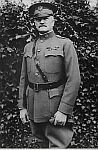 | When the Great War erupted in 1914, the US remained on their side of the ocean, deeming it to be a solely European conflict. When German submarines targeted American civilian targets, the US had no choice but become involved. Placed in charge of the US military was John J. Pershing, veteran of the hunt for Pancho Villa. The Allies wanted American men thrown into the existing military system to alleviate their appalling casualties, but Pershing refused. Rather than disperse his troops among British and French forces, Pershing wanted to keep it as an American force. That resolve resulted in shaping what is now the modern American military. Produced and Written by Jennifer Petrucelli. Running Time: (0:28:26) |
George S. Patton: American Achilles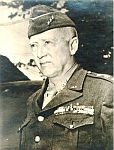 | He longed for combat, saying that he was destined for war. Serving on the punitive hunt for Pancho Villa, Patton enjoyed a brief moment of fame for gunning down some of Villa's lieutenants and returning to US camps with their bodies draped over the hood of his jeep. It was a small taste of the glory he deeply desired, a desire nearly stolen from him by an injury sustained in World War I that took him out of the thick of fighting. He would return as a ferocious, implacable military commander in World War II, as the first US General to battle against the Nazi forces. His outstanding tactics in the Mediterranean as well as his brilliant command of the mobile tank forces in Europe changed the battlefield. But Patton's belligerence, his profane and violent mood-swings that erupted on his own men, were nearly his undoing. Produced and Written by Mark Page. Running Time: (0:29:35) |
Disclaimer: All resources (including books and websites) provided on indyintheclassroom.com are intended to be used by educators. Indyintheclassroom.com is not responsible for the content on linked websites.
Copyright: All images on Indyintheclassroom.com are used with permission or are in the public domain. Exceptions are noted. For additional information see our Copyright section. |
Indy Connections: Spring Break Adventure
Below are current event articles that relate to events, topics, and people found in Spring Break Adventure.
World War One: 10 interpretations of who started WW1
bbc.com
2/11/2014
No one nation deserves all responsibility for the outbreak of war, but Germany seems to me to deserve most. It alone had power to halt the descent to disaster at any time in July 1914 by withdrawing its "blank cheque" which offered support to Austria for its invasion of Serbia. I'm afraid I am unconvinced by the argument that Serbia was a rogue state which deserved its nemesis at Austria's hands. And I do not believe Russia wanted a European war in 1914 - its leaders knew that it would have been in a far stronger position to fight two years later, having completed its rearmament programme.
A Long Toss Back to the Heyday of Negro League Baseball
Smithsonian.com
11/15/2013
Called Organized Baseball was still segregated. I leaned closer, bent an ear, telling myself: Listen carefully, Frank, because this is oral history, this is one of the last times old black and white players will ever be able to speak across that divide of time and race. And, in fact, Feller has passed on since then, although Irvin lives yet, age 94, one of the last survivors of the Negro Leagues—that shadow baseball government that managed to thrive for about a quarter of a century, allowing African-Americans the chance to play the national pastime for pay (if not for much). The heyday of the Negro Leagues was the ’30s, the cynosure of most seasons the East-West All-Star Game, which was usually played in Chicago at Comiskey Park, home of the white White Sox. Indeed, in 1941, just before America entered the war, that fabled season when Ted Williams batted .406 and Joe DiMaggio hit safely in 56 straight games, the Negro League All-Star Game drew a crowd of more than 50,000 fans. Buck Leonard hit a home run, driving in three runs in the game. He was one of the very best baseball players alive, a stocky 5-foot-10, 185-pound first baseman.
The Woman Who (Maybe) Struck out Babe Ruth and Lou Gehrig
Smithsonian.com
7/23/2013
One spring day my son came home from school and asked, “Do you know about the girl who struck out Babe Ruth?” I smiled indulgently at this playground tall tale. But he insisted it was true. “I read a book about her in the library,” he said. “Must have been fiction,” I churlishly replied, before consulting the Baseball Almanac to bludgeon my 10-year-old with bitter fact. Instead, I discovered the astounding story of Jackie Mitchell, a 17-year-old southpaw who pitched against the New York Yankees on April 2, 1931. The first batter she faced was Ruth, followed by Lou Gehrig, the deadliest hitting duo in baseball history. Mitchell struck them both out. There was a box score to prove it and news stories proclaiming her “organized baseball’s first girl pitcher.”
A Brief History of the Baseball
Smithsonian.com
6/28/2013
From the fields and stadiums, to the uniforms, to the statistics, baseball is good design. There’s no better evidence of that than the iconic white and red ball. With its pristine white surface and high contrast red stitching, today’s baseball is a beautiful union of form and function, an almost ideal Modernist object. But it didn’t start out that way. The baseball didn’t emerge fully formed when the first batter stepped up to the first plate. Like the football, it’s hard to attribute its invention to one person, especially considering that in those heady, mustachioed, pre-professional days of baseball, balls were made by cobblers from the rubber remnants of old shoes, with rubber cores wrapped in yarn and a leather cover – if you were lucky. In some regions, sturgeon eyes were used instead of melted shoe rubber. In the 1840s and ’50s, it was anything but an exact science and pitchers often just made their own balls. Obviously, there was some variety in size and weight that resulted just from the nature of the handmade process and separate regional developments.
Introducing a Special Report on Energy
Smithsonian.com
5/25/2013
In a world hungry for power, a new wealth of innovation hopes to keep the engine of industry running for the foreseeable future.
Baseball Spoiled by Nature: Top 10 Moments
Nationalgeographic.com
3/30/2013
A new Major League Baseball season starts with opening day in April and ends in October or November with the World Series. Between those bookends, the 30 teams each play 162 regular-season games. That's a lot of baseball. That's also a lot of opportunity for Mother Nature to wreak havoc on America's pastime. With a new season upon us, we look back at the top ten moments when the natural world won.
Why the Best Success Stories Often Begin With Failure
Smithsonian.com
2/1/2013
Long before the iPhone made him the god of gadgets, Steve Jobs launched his tech career by hacking land lines to make free long-distance calls. Bob Dylan’s band, the Golden Chords, lost a high-school talent competition to a tap dancing act. Behind every success story is an embarrassing first effort, a stumble, a setback or a radical change of direction. It’s these first clumsy steps on the road to fame and fortune that fascinate writer Seth Fiegerman, who edits the blog OpeningLines.org, a collection of case studies on the origins of famous careers.
President Obama’s Autopen: When is an Autograph Not an Autograph?
Smithsonian.com
1/8/2013
President Obama was in Hawaii when he signed the fiscal cliff deal in Washington D.C. last week. Of course, it’s now common for us to send digital signatures back and forth every day, but the President of the United States doesn’t just have his signature saved as a JPEG file like the rest of us lowly remote signatories. Instead, he uses the wonder that is the autopen – a device descended from one of the gizmos in Thomas Jefferson’s White House.
Elon Musk, the Rocket Man With a Sweet Ride
Smithsonian.com
12/4/2012
“Five, four, three...” At T-minus three seconds white flames explode from the 22-story rocket. “Two, one. Liftoff.” The night sky erupts with light and fire and clouds of smoke, as nine engines generating 1,320,000 pounds of thrust push the vehicle skyward at NASA’s storied Cape Canaveral launchpad. The road to orbit is short but marked with a series of technical miracles, and the rocket hits them all: 17,000 miles per hour to break from Earth’s atmosphere. First and second stage separation. Second stage ignition. In minutes it’s over: The capsule carrying 1,000 pounds of cargo is in orbit, racing toward a docking with the International Space Station, itself traveling so fast it circles the Earth 15 times a day, the second such flight of the Falcon 9 and its Dragon capsule since May. “It proves that we didn’t just get lucky the first time around,” says the rocket’s chief designer, Elon Musk. “Next year we expect four to five launches, the year after that eight to ten, and the launch rate will increase by 100 percent every year for the next four to five years.” At that rate Musk, a self-taught engineer and Internet whiz kid, will be launching more rockets than even China or Russia.
Uncovering the Truth Behind the Myth of Pancho Villa, Movie Star
Smithsonian.com
11/6/2012
The first casualty of war is truth, they say, and nowhere was that more true than in Mexico during the revolutionary period between 1910 and 1920. In all the blood and chaos that followed the overthrow of Porfirio Diaz, who had been dictator of Mexico since 1876, what was left of the central government in Mexico City found itself fighting several contending rebel forces—most notably the Liberation Army of the South, commanded by Emiliano Zapata, and the Chihuahua-based División del Norte, led by the even more celebrated bandit-rebel Pancho Villa–and the three-cornered civil war that followed was notable for its unrelenting savagery, its unending confusion and (north of the Rio Grande, at least) its unusual film deals. Specifically, it is remembered for the contract Villa was supposed to have signed with a leading American newsreel company in January 1914. Under the terms of this agreement, it is said, the rebels undertook to fight their revolution for the benefit of the movie cameras in exchange for a large advance, payable in gold.
Disclaimer: All resources (including books and websites) provided on indyintheclassroom.com are intended to be used by educators. Indyintheclassroom.com is not responsible for the content on linked websites.
Copyright: All images on Indyintheclassroom.com are used with permission or are in the public domain. Exceptions are noted. For additional information see our Copyright section. |

Journey of Radiance | Spring Break Adventure | Love's Sweet Song
Young Indy Home
Proud Supporters of |
 |
 |
Copyright © 2007- IndyintheClassroom.com
Send questions & comments toWebmasterThis website is owned and operated by EDventure Quest Learning LLC. It is not hosted, operated, endorsed, sponsored by, or affiliated with, Lucasfilm, Ltd., Paramount Pictures, or CBS or any of their affiliates. Indiana Jones and all related indicia are TM & © Lucasfilm Ltd. All rights reserved. COURTESY OF LUCASFILM LTD. |
Disclaimer | Site Map | Search