Attack of the Hawkmen | Adventures in the Secret Service | Espionage Escapades
Young Indy Home
Chapter Overview
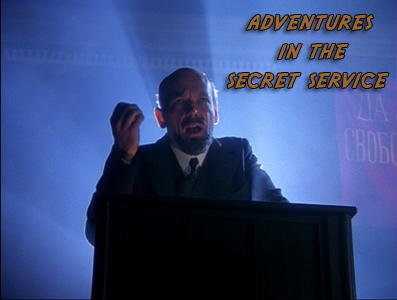
The horrors of World War I have Indy doing anything he can to aid in ending the Great War. An opportunity arises when Indy is ordered to escort two Habsburg royals into Austria to negotiate a separate peace from Germany. Secret documents, hidden agendas, and check points make the journey all the more risky for Indy and his companions. Austrian Emperor Karl I is apparently willing to negotiate the peace, but a devious prince stops Indy at every turn. Indy’s adventures then take him into the heart of Russia as he attempts to gauge the country’s pathway to Revolution. A growing friendship with Bolsheviks and an empowering speech by Vladimir Lenin challenges Indy’s loyalties to his duty.
Key Topics: | Attempts to end World War I; Espionage; The Russian Revolution |
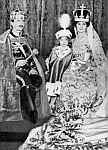
Historic People: | Emperor Karl I of Austria-- Last Emperor of Austria and last King of Hungary and Bohemia, and the last monarch of the Habsburg Dynasty. Fought to end WWI. |
People and Topics
DescriptorLast Emperor of Austria and last King of Hungary and Bohemia, and the last monarch of the Habsburg Dynasty. Fought to end WWI. BooksCochran, Br. Nathan. Venerable Karl of Austria, Emperor and King: His Cause for Beatification. August/September, 2004. Balassa, Imre. Death of an Empire: The First Authentic and Intimate Account of the Life of Karl IV, Last of the Ruling Hapsburgs. New York: Hillman-Curl, Inc., 1937. Websites |
DescriptorRevolutionary who led the Bolsheviks in the Russian Revolution. Created the world's first communist state. BooksService, Robert. Lenin: A Biography. Cambridge, MA: The Bellknap Press of Harvard University Press, 2000. Conquest, Robert. Lenin. London: Fontana/Collins, 1972. Websites |
DescriptorRevolution that saw the end of the Romanov Dynasty in Russia and the formation of the world's first communist state. This revolution led to the formation of the USSR. Other historical consequences include the brief Russian alliance with Hitler, the Cold War, Space Race, Cuban Missile Crisis, Vietnam and Korean Wars, and more. BooksFiges, Orlando. A People's Tragedy: The Russian Revolution, 1891-1924. New York, NY: Viking, 1997 c.1996. Suny, Ronald Grigor. The Soviet Experiment: Russia, the USSR and the Successor States. Oxford: Oxford University Press, 1997. WebsitesSeventeen Moments in Soviet History Leon Trotsky's History of the Russian Revolution |
DescriptorIn early 1917, Austrian Emperor Karl I secretly attempted to negotiate peace with the Allies separate from his own ally, Germany. The Emperor used his wife's brother, Sixtus, as an intermediary with the French. However, by 1917 the French new the Central Powers were doomed and a separate peace was out of the question. The French published Karl's negotiations in an attempt to further unwind the alliance of Germany and Austria. France's strategy worked to some degree, resulting in Germany's distrust of Austria for the remainder of the war. BooksShanafelt, Gary W. The secret enemy: Austria-Hungary and the German alliance. East European Monographs, 1985. Balassa, Imre. Death of an Empire: The First Authentic and Intimate Account of the Life of Karl IV, Last of the Ruling Hapsburgs. New York: Hillman-Curl, Inc., 1937. Websites |
Disclaimer: All resources (including books and websites) provided on indyintheclassroom.com are intended to be used by educators. Indyintheclassroom.com is not responsible for the content on linked websites.
Copyright: All images on Indyintheclassroom.com are used with permission or are in the public domain. Exceptions are noted. For additional information see our Copyright section. |
Documentary Previews
Below you will find information about each documentary that supplements Adventures in the Secret Service.
Karl: The Last Habsburg Emperor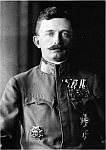 | Karl, the last Emperor of Austria and King of Hungary, was labeled a traitor and failure during his lifetime. His own people exiled him. Still, there has been recognition that perhaps Karl's short reign should be remembered less for his failures than for his unsuccessful yet sincere attempts to transform his empire and bring an end to World War I. Produced and Written by Adam Sternberg. Running Time: (0:29:49) |
The Russian Revolution: All Power to the Soviets!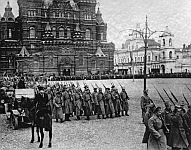 | In 1991, the Soviet Union, one of the most powerful nations on Earth, collapsed. Born in socialist revolution almost three-quarters of a century earlier, its birth in 1917 sent shockwaves around the world. Right from the start, the Russian Revolution promised a better world of equality, dignity, and social justice. What happened to those promises? Produced and Written by Sharon Wood. Running Time: (0:33:35) |
V.I. Lenin: History Will Not Forgive Us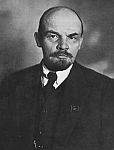 | To create the utopian world he envisioned, Lenin did what he thought he had to. His violent seizure of power -- and the harsh measures he took to hold onto it -- inspired generations of revolutionaries, and dictators. Brilliant and driven, Lenin wanted to change history. He did, but not in the way he expected. Produced and Written by Sharon Wood. Running Time: (0:33:54) |
Disclaimer: All resources (including books and websites) provided on indyintheclassroom.com are intended to be used by educators. Indyintheclassroom.com is not responsible for the content on linked websites.
Copyright: All images on Indyintheclassroom.com are used with permission or are in the public domain. Exceptions are noted. For additional information see our Copyright section. |
Indy Connections: Adventures in the Secret Service
Below are current event articles that relate to events, topics, and people found in Adventures in the Secret Service.
The Most Loved and Hated Novel About World War I
Smithsonian.com
6/16/2015
On December 5, 1930, just over 12 years after the end of World War I, German moviegoers flocked to Berlin’s Mozart Hall to see one of Hollywood’s latest films. But during the movie, a cadre of 150 Nazi Brownshirts, nearly all too young to have fought in World War I, were led into the theater by propagandist Joseph Goebbels. Spewing anti-Semitic invective at the screen, they repeatedly shouted “Judenfilm!” as they tossed stink bombs from the balcony, threw sneezing powder in the air, and released white mice into the theater. A somewhat shocking turn of events, considering the movie was the highly anticipated adaptation of countryman Erich Maria Remarque’s novel All Quiet on the Western Front, the blockbuster novel that had transfixed the nation months earlier.
Sunken Wrecks Of Epic WWI Naval Battle Revealed
news.sky.com
6/16/2015
They show the battered wrecks of several of the 25 warships - 14 of them British - that were blown up during the Battle of Jutland on 31 May, 1916. Among them is HMS Invincible which was torn apart by a German shell, killing more than 1,000 sailors. HMS Defence and HMS Queen Mary were also scanned during the survey.
World War One time capsule discovered in Germany
telegraph.co.uk
11/21/2014
A hundred years after the outbreak of the First World War, builders renovating a historic castle in Germany’s Ruhr valley have found a time capsule that appears to have been left in memory of soldiers who died in the conflict.
The Legend of What Actually Lived in the "No Man's Land" Between World War I's Trenches
Smithsonian.com
9/8/2014
During World War I, No Man’s Land was both an actual and a metaphorical space. It separated the front lines of the opposing armies and was perhaps the only location where enemy troops could meet without hostility. It was in No Man's Land that the spontaneous Christmas truce of December 1914 took place and where opposing troops might unofficially agree to safely remove their wounded comrades, or even sunbathe on the first days of spring.
First World War: how Telegraph readers saw it
telegraph.co.uk
9/2/2014
Everyone knows about the horrors of life in the trenches of the First World War, but it’s only recently that the anxieties of people back home in Britain have started to be talked about.
At long last, those feelings are being aired more widely, thanks to a new anthology of letters written, at the time, to The Daily Telegraph. The message these missives impart is of a nation that was desperate to provide support, of any kind, to our brave boys fighting on just the other side of the Channel.
The Blockbuster World War I Film that Brought Home the Traumatic Impact of War
Smithsonian.com
8/21/2014
The United States had entered the war with high hopes and dreams—aiming to make the world “safe for democracy” as President Woodrow Wilson would proclaim, but by the 1920s there were strong feelings that the U.S. should never have gotten itself involved in the byzantine affairs of the European powers. Isolationist sentiments grew across the country especially after the rejection of the Versailles Treaty by the U.S. Congress in 1920. These feelings of bitterness and disappointment found their fullest expression in the literature of the day, written by members of what has become known as the “Lost Generation,” most notably John Dos Passos, William Faulkner, F. Scott Fitzgerald and Ernest Hemingway.
First World War centenary: how the events of August 2 1914 unfolded
telegraph.co.uk
8/2/2014
Britain went to war on August 4 1914. In the second part of a four-day series, we document the dramatic events leading up to the declaration of war as they happened, hour-by-hour.
The ten men who shaped the road to war
independent.ie
5/10/2014
1 HORATIO KITCHENER As the first British troops marched whistling off to the front in autumn 1914 the cliche of the hour was: "It'll be all over by Christmas." An experienced campaigner on three continents, Horatio Kitchener from Ballylongford, Co Kerry, knew it would be a long haul. As Secretary of State for War he put together the largest volunteer army the world had ever seen, and put industrial production on an efficient war footing.
Help Transcribe Diaries From World War I
Smithsonian.com
3/18/2014
The National Archives currently has in its collection 1.5 million pages of handwritten diaries kept by soldiers of World War I. They're some of the most requested documents in the National Archives reading room, but until now have been accessible only to anyone who's made the trip to D.C. But now the archivisits are working to put them online, and you can help them. The project is called Operation War Diary, and it comes from a partnership between the National Archives, the citizen science initiative Zooniverse and the Imperial War Museum in the UK. The diaries have all been scanned and posted online for citizen historians to look at and transcribe. According to the project: "The war diaries contain a wealth of information of far greater interest than the army could ever have predicted. They provide unrivalled insight into daily events on the front line, and are full of fascinating detail about the decisions that were made and the activities that resulted from them."
World War One: 10 interpretations of who started WW1
bbc.com
2/11/2014
No one nation deserves all responsibility for the outbreak of war, but Germany seems to me to deserve most. It alone had power to halt the descent to disaster at any time in July 1914 by withdrawing its "blank cheque" which offered support to Austria for its invasion of Serbia. I'm afraid I am unconvinced by the argument that Serbia was a rogue state which deserved its nemesis at Austria's hands. And I do not believe Russia wanted a European war in 1914 - its leaders knew that it would have been in a far stronger position to fight two years later, having completed its rearmament programme.
Disclaimer: All resources (including books and websites) provided on indyintheclassroom.com are intended to be used by educators. Indyintheclassroom.com is not responsible for the content on linked websites.
Copyright: All images on Indyintheclassroom.com are used with permission or are in the public domain. Exceptions are noted. For additional information see our Copyright section. |

Attack of the Hawkmen | Adventures in the Secret Service | Espionage Escapades
Young Indy Home
Proud Supporters of |
 |
 |
Copyright © 2007- IndyintheClassroom.com
Send questions & comments toWebmasterThis website is owned and operated by EDventure Quest Learning LLC. It is not hosted, operated, endorsed, sponsored by, or affiliated with, Lucasfilm, Ltd., Paramount Pictures, or CBS or any of their affiliates. Indiana Jones and all related indicia are TM & © Lucasfilm Ltd. All rights reserved. COURTESY OF LUCASFILM LTD. |
Disclaimer | Site Map | Search